


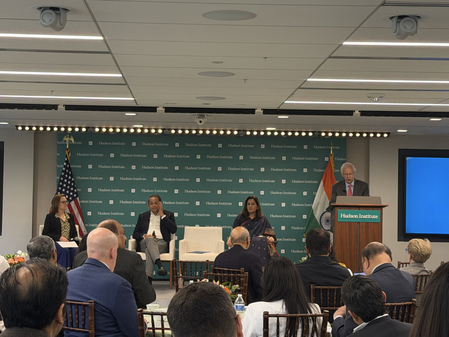
The role of Pakistan in US strategy has sparked a lively debate among policymakers, particularly regarding the focus on India. Former US Deputy Secretary of State, Kurt Campbell, emphasized the importance of anchoring American strategic interests in India for peace and stability. He highlighted the significance of the relationship between the United States and India, stating that all strategic interests align with Delhi.
On the other hand, concerns were raised about the continued “hyphenation” of India and Pakistan in US policy thinking. Ram Madhav stressed that India’s relationship is broader and should not be overshadowed by the ties with Pakistan. Elizabeth Threlkeld presented a more nuanced view, suggesting that engaging with both countries does not have to be a zero-sum game. She emphasized the importance of managing relationships with both Islamabad and New Delhi, especially in light of potential escalation risks in South Asia.
The discussion also touched upon broader US policy shifts, including increased engagement with Pakistan in the context of Middle East dynamics and evolving China policy. Campbell acknowledged the uncertainty in Washington’s strategic direction, which has led to anxiety among partners. He cautioned that this uncertainty could undermine confidence among key partners like India, particularly during times of global instability.
Speakers at the panel agreed that while tactical engagement with Pakistan may continue, the long-term trajectory of US strategy in the Indo-Pacific will be significantly influenced by its partnership with India. The New India Conference brought together senior officials and analysts to evaluate India’s global role and evolving strategic partnerships, reflecting the deepening engagement between the US and India over the past two decades.
