


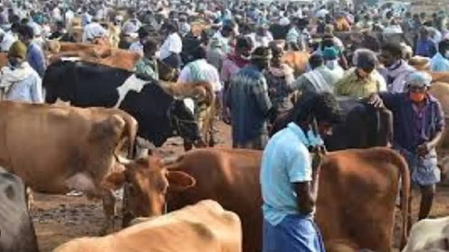
The Poigai cattle market near Vellore, Tamil Nadu, which has been a bustling hub for livestock trading for over a century, is experiencing a significant slowdown in business due to the enforcement of the Model Code of Conduct (MCC) ahead of the Assembly elections. Normally attracting over 2,000 traders on Tuesdays, the market witnesses transactions involving about 1,500 cattle worth crores of rupees. However, with the MCC imposing strict cash limits, restricting individuals to carry a maximum of Rs 50,000, the market’s operations have been severely affected.
Following the implementation of the MCC, the market’s recent trading day saw a notable decrease in both traders and cattle arrivals. The market heavily relies on cash transactions, making it vulnerable to the intensified surveillance measures during the election period. Increased inspections by flying squads and monitoring teams have led to cash seizures and raised concerns among traders and buyers, contributing to a visible decline in sales.
Participation in the market has dwindled, with traders estimating a 30% drop in sales compared to normal days. The restrictions have exposed the challenges faced by those unaccustomed to digital payment systems, hindering their ability to swiftly adapt to alternative transaction methods. The market, which draws traders not only from Vellore but also from neighboring districts and states, is grappling with reduced movement of buyers due to stringent checks at borders, impacting the livelihoods of many involved in the cattle trade.
The situation has sparked worries among traders and cattle owners, who heavily rely on the weekly market for their livelihoods. As uncertainties loom over the continuity of regular trade in the upcoming weeks, stakeholders are advocating for measures to facilitate legitimate transactions during the election period while ensuring compliance with regulations. This is crucial to prevent prolonged disruptions to the rural economy that heavily depends on livestock commerce.
