


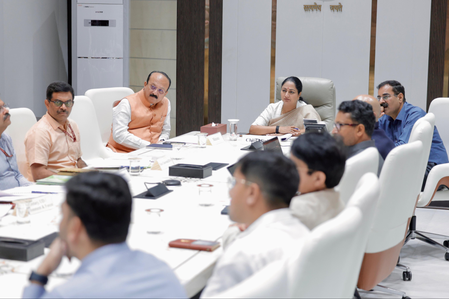
Delhi Chief Minister Rekha Gupta has announced that residents of all slum clusters established in the city up to January 1, 2025, will now qualify for rehabilitation benefits. This decision was made during the 36th meeting of the Delhi Urban Shelter Improvement Board (DUSIB), which was chaired by Chief Minister Gupta. The city of Delhi is home to a total of 675 slum clusters spread across various districts.
In a statement, Chief Minister Gupta highlighted that this move aligns with the Delhi Slum and JJ Rehabilitation and Relocation Policy, 2026, which was developed under the guidance of Union Home Minister Shah. Previously, the cut-off year for rehabilitation was 2015, but by extending eligibility to January 1, 2025, the decision aims to include numerous slum-dwelling families in the rehabilitation process, offering them renewed hope.
CM Gupta emphasized that this step reflects Prime Minister Narendra Modi’s dedication to the well-being of the underprivileged, facilitating the provision of modern housing equipped with schools, health centers, anganwadis, playgrounds, and other essential amenities. This initiative is designed to enable families to lead dignified and secure lives.
The Chief Minister also mentioned that last year, she had halted slum demolitions without ensuring rehabilitation, ensuring that no impoverished individual would be left homeless. The government plans to refurbish 50,000 unoccupied flats and allocate them to eligible slum residents. Gupta stressed that the primary goal is to secure a stable roof over every eligible family’s head and offer them a chance to be rehabilitated within their own locality, emphasizing that this effort is more than just about housing—it is a mission to restore dignity to their lives.
CM Gupta directed various entities, including the Railways, Delhi Development Authority (DDA), and all government departments, to prevent the demolition of any slum in Delhi. In cases where removal is unavoidable due to development projects or other reasons, alternative housing must be arranged in advance. Additionally, approximately 50,000 houses constructed years ago in the city’s outskirts will be revamped and assigned to slum residents.
The 675 slum clusters in Delhi consist of around 3.06 lakh (306,000) slum dwellings, covering a total area of 804.5 hectares. Nearly half of these slums are situated on DDA land, while about 23% are on government/public sector or private land, and 22% are on land owned by agencies like the Municipal Corporation of Delhi (MCD) and DUSIB. District-wise, South-East Delhi has the highest number of clusters at 144, followed by North Delhi with 109, Central Delhi with 92, and West Delhi with 68.
