


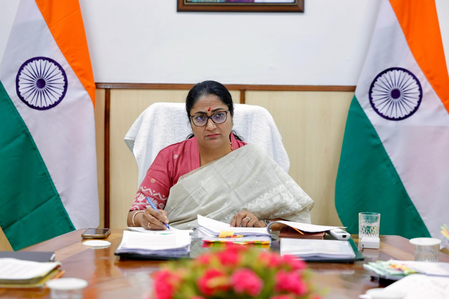
Delhi Chief Minister Rekha Gupta has directed all departments to enhance readiness as per the Heat Wave Action Plan 2026. With temperatures soaring and heatwave conditions worsening, a meeting chaired by Gupta emphasized the government’s goal of eliminating heatwave-related fatalities by 2030. The Chief Minister, along with Chief Secretary Rajeev Verma and senior officials, focused on ensuring hospitals have sufficient bed capacity for heat-related cases and equipped ambulances for emergencies.
More than 339 health centers in Delhi now have ORS, ice packs, and related supplies, while over 30 hospitals boast dedicated ‘cool rooms’ for heatstroke management. Training has been provided to 174 medical officers and ASHA workers to handle heat-related illnesses, with 330 ambulances on standby for immediate response. A citywide awareness campaign is also in the works to educate residents on preventive measures, including the introduction of a ‘water bell’ system in schools to promote hydration and prevent dehydration.
Chief Minister Gupta stressed the availability of clean drinking water in various public places like hospitals, schools, construction sites, canteens, police stations, post offices, and bus stands. She highlighted the importance of seamless functioning of water tankers, coolers, and ATMs across the city, along with arrangements for shade and water for animals and birds. The Heat Action Plan 2026, overseen by the Delhi Disaster Management Authority, involves coordination among multiple departments and over 17 knowledge partners to ensure a well-coordinated response.
The urgency of the situation was underscored by the Chief Minister, citing Delhi’s record-breaking temperatures in recent years, including a high of 43.7 degrees Celsius in 2025. To address this, a science-based framework has been established, utilizing the India Meteorological Department’s colour-coded alert system for continuous monitoring and real-time alerts to departments and the public.
