


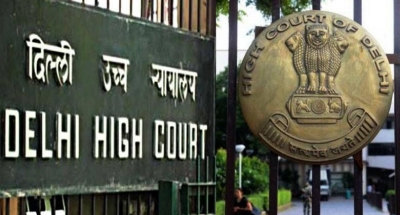
The Delhi High Court announced the appointment of three senior advocates as amici curiae to represent AAP leaders Arvind Kejriwal, Manish Sisodia, and Durgesh Pathak. This decision came as the leaders chose not to participate in proceedings related to the alleged Delhi excise policy case. Justice Swarana Kanta Sharma, on a single-judge Bench, highlighted the absence of representation for the three leaders during a hearing on a Central Bureau of Investigation (CBI) petition challenging their discharge in a corruption case.
The court observed that the respondents were neither present in person nor represented through counsel. Consequently, the judge stated that three senior advocates would be appointed to assist the court as amici curiae. Justice Sharma mentioned that once the amici are appointed, she would hear arguments from the CBI, scheduling the next hearing for May 8.
The case at hand involves a criminal revision petition filed by the CBI against the trial court’s decision to discharge Kejriwal, Sisodia, and other accused in the alleged Delhi excise policy scam. This development follows the AAP leaders’ choice to withdraw from the proceedings after Justice Sharma refused to recuse herself from the case.
Kejriwal, in a letter, referenced “Satyagraha” and expressed disappointment in the hope of receiving justice from Justice Sharma. He emphasized his right to challenge any adverse ruling in the Supreme Court. Similarly, Sisodia clarified that his decision to abstain was not due to animosity towards the judiciary but stemmed from personal conviction.
Earlier, the Delhi High Court had issued notice on the CBI’s revision plea and temporarily halted certain negative remarks made by the trial court against the investigating agency and its officers. The CBI alleges that the excise policy, now annulled, under the former AAP-led Delhi government was manipulated to benefit specific liquor traders in exchange for kickbacks. The trial court, in a comprehensive judgment exceeding 1,100 paragraphs on February 27, acquitted all the accused, dismissing the prosecution’s claim of a broad conspiracy and noting that the excise policy resulted from a consultative and thoughtful process.
