


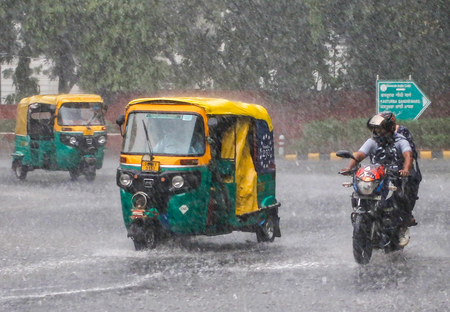
Delhi-NCR is expected to have a prolonged spell of wet and unsettled weather until Friday, with intermittent rainfall, thunderstorms, lightning, and strong winds forecasted. This change in weather is likely to bring relief from the intense summer heat, maintaining temperatures below the seasonal average in early June. The India Meteorological Department (IMD) has predicted partly cloudy to generally cloudy skies in the national capital over the next few days, with a yellow alert issued for Thursday and Friday cautioning about light rainfall accompanied by thunderstorms, lightning, and gusty winds.
Similar atmospheric conditions are anticipated to persist on Saturday, even though no weather alert has been issued for that day. Meteorologists attribute the expected rainfall to normal pre-monsoon activity, which typically affects northern India in June. These showers are projected to keep temperatures below 40 degrees Celsius for the next six days, with daytime temperatures ranging between 36 and 39 degrees Celsius during the first week of June. This offers residents a cooler start to the month compared to the historical average maximum temperatures of around 40 degrees Celsius in the initial days of June.
Recent observations from Safdarjung, Delhi’s primary weather station, show a maximum temperature of 39.1 degrees Celsius, slightly below the seasonal norm, while the minimum temperature is recorded at 27.4 degrees Celsius, slightly above average. Additionally, the southwest monsoon is set to arrive in Kerala on Thursday, marking the beginning of India’s annual four-month rainy season. The monsoon’s onset is crucial for agriculture, water reservoir replenishment, and economic activities nationwide, with widespread rainfall expected in regions like Kerala and Coastal Karnataka, accompanied by heavy showers and thunderstorms in the upcoming days.
The IMD’s forecast includes significant rainfall across various areas, driven by weather systems in the Arabian Sea, Bay of Bengal, and nearby regions, creating favorable conditions for precipitation in southern, eastern, northeastern, and northwestern India. The progression of the monsoon is closely monitored due to its impact on farming, water availability, and overall weather patterns throughout the country. As the southern states receive substantial rainfall, northern regions like Delhi-NCR are also expected to benefit from increased moisture and pre-monsoon showers.
