


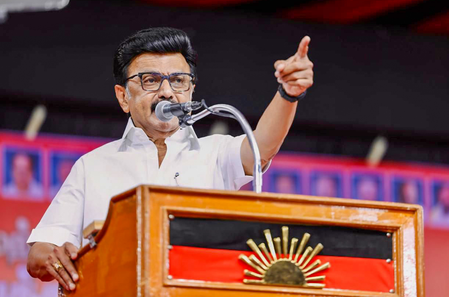
The Dravida Munnetra Kazhagam (DMK) has taken a strong stance against the Centre’s proposed delimitation exercise in Tamil Nadu. The party views this as a crucial moment in the state’s political history and has warned of significant repercussions if the legislation is pushed through Parliament. The DMK has positioned itself as the leader of the resistance, emphasizing that the results of its ongoing protests will shape Tamil Nadu’s future political representation.
The party has reiterated its firm stance against any measures that could weaken the state’s voice in Parliament, despite facing increasing pressure. Expressing skepticism towards recent assurances by Prime Minister Narendra Modi and Union Home Minister Amit Shah that Tamil Nadu’s representation would not be diminished, the DMK argues that the actual contents of the Bill contradict these promises.
Critiquing the proposed legislation, the DMK has raised concerns about the extensive powers granted to the Delimitation Commission, which could potentially lead to arbitrary changes in state representation. Describing the Bill as a strategic and misleading maneuver that may undermine federal principles and disproportionately impact southern states, the party has highlighted discrepancies between the government’s words and the bill’s provisions.
The DMK has demanded the immediate withdrawal of the Bill and cautioned the Centre against attempting to push it through using its parliamentary majority. The party has warned that any unilateral efforts to pass the legislation without consensus could provoke a strong political backlash in Tamil Nadu. Drawing historical parallels, DMK leaders have pointed out how past Prime Ministers safeguarded federal balance by halting delimitation through constitutional amendments.
Accusing the current administration of encroaching on state rights, the DMK continues to advocate for the restoration of constitutional safeguards to ensure fair representation. The party has urged the Union government to heed Tamil Nadu’s concerns and engage in constructive dialogue, as the issue is expected to remain a significant political focal point in the coming days.
