


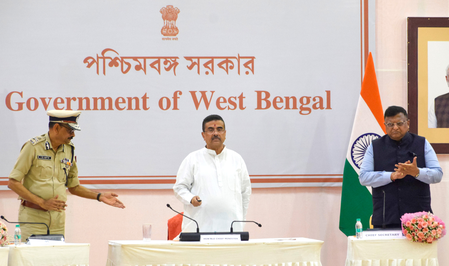
The West Bengal state cabinet, chaired by Chief Minister Suvendu Adhikari, approved the draft of the Uniform Civil Code, West Bengal, 2026. This move aims to introduce a uniform civil code in the state. A committee led by former Supreme Court judge Justice Ranjana Prakash Desai (retired) will now review the draft Bill.
Chief Minister Adhikari highlighted that certain communities, including tribals, indigenous people, Kurmis, and other ancient tribal groups, will be exempt from the proposed law. This exemption aligns with the approach taken by Uttarakhand and Gujarat. The primary objective of the Bill is to establish a single law applicable throughout West Bengal, replacing separate personal laws based on religion.
Upon implementation, West Bengal will become the fourth Indian state to enforce the Uniform Civil Code, following Gujarat, Uttarakhand, and Assam. Additionally, the Chief Minister instructed departments to enforce stringent cost-control measures and eliminate unnecessary expenses. Efforts to exclude ineligible individuals from social welfare projects were emphasized to reduce costs and enhance project efficiency.
Furthermore, the Chief Minister emphasized the need for state departments to prevent revenue leakages, particularly in tax collection from sectors like stone quarries and sand mining. The cabinet also sanctioned the perpetual transfer of government-vested land to the Border Security Force (BSF) and Sashastra Seema Bal (SSB) for various purposes, such as border outpost construction and road development. Additionally, proposals for establishing nine fast-track courts in different districts and creating 35 associated posts were approved.
