


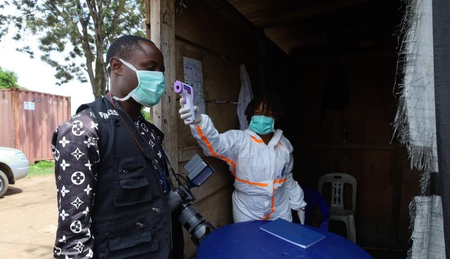
The Health Minister of the Democratic Republic of the Congo, Roger Kamba, stated that the Ebola outbreak in the country is in its early phase, with a rise in infections and deaths. Approximately 1,000 suspected cases have been identified in affected areas, of which 101 have tested positive, as per Kamba. The outbreak has seen around 200 to 220 deaths linked to it, with 17 confirmed through laboratory tests.
Authorities are emphasizing response efforts to combat the epidemic, with a planned operation expected to last four to six months, according to Kamba. The outbreak, caused by the Bundibugyo strain of Ebola, is considered less lethal than the Zaire strain but remains a significant concern if infections escalate. Currently, there is no approved vaccine or specific treatment for Bundibugyo Ebola.
To control the spread of the virus, health authorities are implementing measures such as surveillance, testing, isolation, contact tracing, community engagement, and safe burials. Civilian passenger flights to and from Bunia, the epicenter of the outbreak, have been suspended by the government, while humanitarian flights are still operational, as reported by Xinhua news agency.
Health Minister Kamba mentioned that the virus might have been circulating before the official declaration of the outbreak on May 15 due to Ebola’s incubation period of up to 21 days. The identification of the outbreak’s “patient zero” is still pending. The World Health Organization (WHO) reported a confirmed Ebola case in Goma, with efforts underway to strengthen the response against the outbreak.
WHO’s acting representative in the DRC, Anne Ancia, highlighted the patient’s positive recovery status in Goma and the ongoing monitoring of contacts. Discussions are centered on reinforcing surveillance, case management, contact tracing, and community engagement in response to the Ebola outbreak caused by the Bundibugyo strain.
