


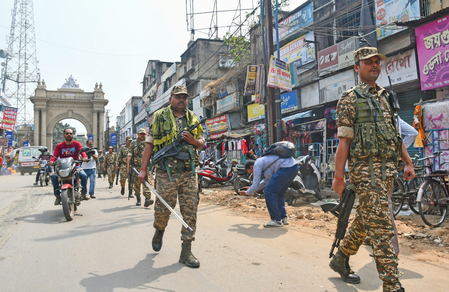
Sensitivity-mapping will play a crucial role in the Election Commission of India’s (ECI) decision on deploying police observers across districts for the upcoming West Bengal Assembly elections. The ECI is categorizing districts based on factors like proximity to the Bangladesh border and past instances of election-related violence.
Districts like Murshidabad, Malda, and Cooch Behar, which share borders with Bangladesh and have a history of significant poll-related violence, fall under a specific category. Meanwhile, districts like Howrah, near Kolkata, known for political violence despite lacking a border with Bangladesh, are placed in another category.
In response to these considerations, the ECI plans to boost the number of central observers, particularly police observers, across all categories. In the previous 2021 elections, the ECI appointed 170 general observers, 84 expenditure observers, and 37 police observers.
The ECI headquarters has informed the CEO’s office in West Bengal of a substantial increase in the number of observers for the upcoming elections. Specifically, the number of police observers is expected to triple, with at least 100 or more to be appointed, granting them enhanced authority in determining the movement of Central Armed Police Forces.
The ECI is emphasizing the significant increase in police observers this time to empower them with greater authority, particularly in deciding the movement of Central Armed Police Forces. Unlike previous elections where District Magistrates had this responsibility, police observers will now hold this authority, ensuring their decisions on CAPF movement and deployment are final.
