


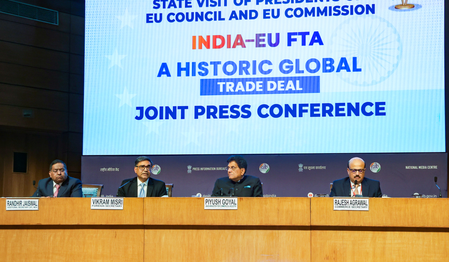
With its large population, growing industrial sector, and desire for a more prominent global role, India presents economic potential and geopolitical significance to the European Union (EU), as per a recent report. The report highlighted the increasing pace of EU-India relations, emphasizing the restart of talks for a long-pending free trade agreement and collaboration on various fronts like supply chains, digital governance, green technologies, and critical infrastructure. This shift signifies a strategic decision rather than just a symbolic move, with the EU showing more interest in the Indo-Pacific region.
The recent progress in negotiations for the EU-India Free Trade Agreement is seen against the backdrop of significant changes in the global strategic landscape, prompting both sides to enhance their economic ties. Europe’s pivot towards India indicates an acknowledgment of the evolving world order, with the report underlining the need for the EU to balance external engagement with internal stability to ensure strategic credibility. Strengthened partnerships with countries like Israel in areas such as research, cybersecurity, and energy initiatives in the Eastern Mediterranean align with this strategic approach.
The EU’s engagement with India serves dual purposes, acting as a counterbalance to China’s influence in the Indo-Pacific while also providing Europe with strategic flexibility to diversify partnerships without compromising existing alliances. This move underscores the broader challenge Europe faces in deepening economic ties with emerging powers while upholding regulatory standards, sustainability goals, and internal political coherence. The EU’s approach towards India reflects a broader strategy of reinforcing critical technology networks and regional equilibriums, aiming to enhance resilience through diversified partnerships.
