


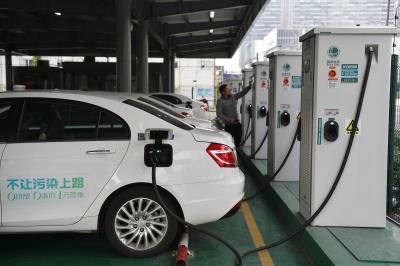
Electric vehicle (EV) charging expenses will see a reduction of up to 15% on weekends during afternoon hours, starting this week, as announced by the climate ministry. This reduction in charging fees will be facilitated by a 50% rate discount on electricity consumed at 94,000 private home-use chargers and 13,000 public fast chargers between 11 a.m. and 2 p.m. on weekends and public holidays, according to the Ministry of Climate, Energy, and Environment. The ministry highlighted that this initiative will lead to a 12-15% decrease in EV charging costs, with the discounts applicable from March to May and September to October.
Reflecting the decreased electricity rates, costs for home-use chargers will be lowered by 48.6 won per kilowatt-hour (kWh), while public fast chargers will provide discounts of 48.6 won on Saturdays and 42.7 won on Sundays and public holidays. The ministry expressed that some private charging operators are expected to join the discount program, with plans to encourage more companies to participate by disclosing the list of those involved.
In a separate development, South Korea’s senior industry ministry official mentioned that major oil-producing nations in the Middle East have displayed interest in utilizing the country’s crude oil storage facilities amidst prolonged conflicts in their region. Yang Gi-uk, head of the ministry’s office of industry, trade, and resource security, noted the increasing desire of Middle Eastern countries to leverage Northeast Asian storage bases due to disruptions in their oil shipments caused by the shutdown of the Strait of Hormuz. Countries like Saudi Arabia, the United Arab Emirates (UAE), and Kuwait heavily depend on crude oil exports for their economies, facing challenges due to these disruptions.
Apart from Abu Dhabi National Oil Co., the UAE’s largest petroleum company, which already has a joint oil storage agreement with South Korea, other Middle Eastern producers are also in discussions with South Korea, according to the official.
