


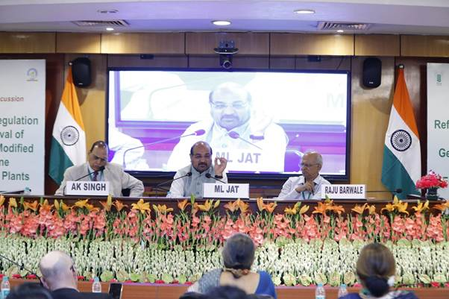
A high-level roundtable of experts in New Delhi emphasized the need for science-based regulatory reforms to promote the safe adoption of Genetically Modified (GM) and Genome-Edited (GE) crops in India. The roundtable, organized by Trust for Advancement of Agricultural Sciences (TAAS) in collaboration with Indian Council of Agricultural Research (ICAR) and Federation of Seed Industry of India (FSII), focused on “Reforms in Regulations and Approval of GM and GE Crop Plants.”
The experts highlighted the importance of a transparent, efficient, and risk-proportionate regulatory framework for GM and GE crops. They stressed the significance of timely adoption of these crops to enhance climate resilience, productivity, nutritional security, farmer incomes, and the global competitiveness of Indian agriculture.
Participants acknowledged India’s scientific capabilities and experience in biosafety regulation but called for the regulatory framework to evolve in line with biotechnological advancements, particularly in genome editing. They aimed to develop a roadmap for efficient approvals of GM and GE crops to meet national needs while ensuring regulatory efficiency and biosafety standards.
The event, attended by over 80 participants including policymakers, agricultural scientists, regulators, industry leaders, economists, and international experts, aimed to modernize India’s agricultural biotechnology regulatory framework. Discussions focused on the need for a balanced regulatory system to facilitate the safe deployment of modern biotechnologies for food and nutritional security, climate resilience, and sustainable agricultural growth.
