


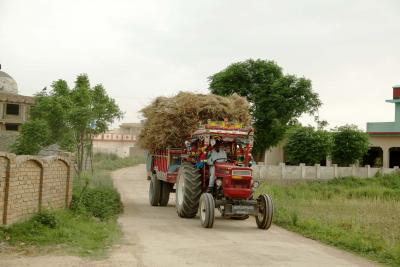
Experts in Pakistan have expressed concerns over the expansion of corporate farming and land acquisition, stating that these initiatives are displacing farmers and privatizing land and water resources, especially in Punjab and Sindh. A recent meeting of the Pakistan Kissan Rabita Committee in Lahore highlighted nationwide opposition to corporate farming, land grabbing, and the worsening agrarian crisis.
During the meeting, attended by 170 delegates representing 35 farmers’ and rural workers’ organizations from across Pakistan, discussions revolved around the country’s political, economic, agrarian, and environmental challenges. Participants attributed the escalating input costs, declining farm incomes, and mounting pressure on small farmers and tenants to IMF-driven neoliberal policies.
Moreover, climate-related issues such as floods, water scarcity, and soil degradation were deliberated upon, with a focus on the disproportionate impact on rural communities. The gathering announced plans for nationwide protests on March 28 to address concerns including corporate farming, land grabbing, unfair crop prices, and the absence of a guaranteed minimum support price.
A recent report highlighted the transformation of Pakistan’s sugar industry into a domain controlled by politically influential families, characterized by political patronage, economic exploitation, and institutional dominance. These influential groups, as per the report, wield authority over both production and policy-making in the sector, once pivotal to the nation’s agricultural output and rural livelihoods.
The report further revealed the existence of a powerful sugar cartel that manipulates supply chains, distorts pricing, and accrues substantial profits at the expense of farmers and consumers, resulting in an annual wealth transfer of Pakistani rupees 610 billion. This economic disparity, equivalent to 1.22% of Pakistan’s GDP, funnels funds from ordinary households to wealthy mill owners, perpetuating a cycle of artificial shortages, inflated prices, and systemic exploitation.
