


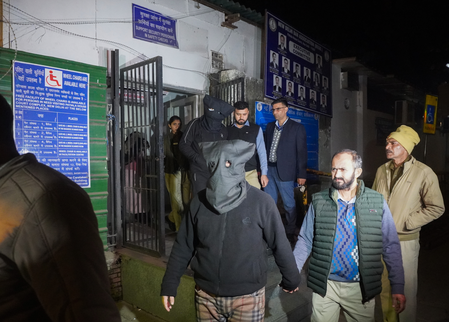
When the Faridabad module was first uncovered, it was initially associated with Jaish-e-Mohammad (JeM). However, the National Investigation Agency (NIA) investigation revealed that the module actually operated under the banner of Ansar Ghazwat-ul-Hind (AGuH), an Al-Qaeda affiliate less known in India compared to JeM. The module, led by Umar Un Nabi, a doctor, briefly used the JeM name to attract youth due to its resonance, as per NIA findings.
It initially seemed the module functioned independently, but the ISI had some influence in guiding it through associates in Jammu and Kashmir. The AGuH, a relatively obscure terror group in India compared to JeM, primarily operated in Jammu and Kashmir without significant impact. Notably, AGuH is linked to Al-Qaeda, not Jaish-e-Mohammad or Lashkar-e-Tayiba, a strategic move for plausible deniability to avoid direct Pakistan connections, officials stated.
Despite appearing autonomous, the Faridabad module, responsible for the Delhi Red Fort blast, had handlers linked to ISI in Jammu and Kashmir aiding its operations. Dr. Shaheen Shahid, a key member, collaborated with Jammu and Kashmir-based Mufti Irfan Ahmad Wagay, facilitating logistics and radicalization within the module. The investigation revealed the module’s radicalized agenda aimed at implementing Sharia law in Jammu and Kashmir, intending to create a highly radicalized society.
The module’s objective extended beyond seeking ‘Azadi’ for Jammu and Kashmir, focusing on Sharia law implementation. The long-term plan involved orchestrating blasts in Delhi and other locations to instill fear and provoke anti-government sentiments. Transitioning from political aspirations to religious propaganda, the module aimed to leverage religious ideologies for broader societal impact, akin to Al-Qaeda and Islamic State strategies. Umar Nabi, the module leader, emphasized religious messaging and bomb plots to attract and radicalize youth towards Sharia law implementation.
