


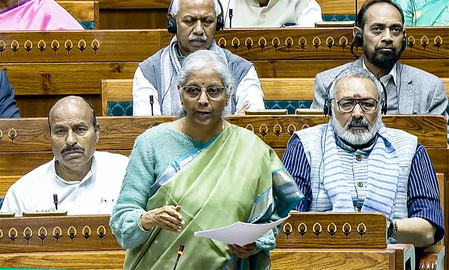
Finance Minister Nirmala Sitharaman, addressing the Rajya Sabha, termed the current economic scenario as a ‘Goldilocks moment,’ where India is experiencing robust growth alongside low inflation. She cited the National Statistical Office’s estimates, projecting real GDP growth at 7.4% and nominal growth at around 8% for 2025-26. Additionally, she noted that consumer price inflation has stabilized at nearly 2% over a sustained period.
The Finance Minister emphasized the government’s commitment to self-reliance, stating that the budget focuses on bolstering domestic manufacturing, ensuring energy security, and promoting individual self-sufficiency. Measures aimed at enhancing living standards, creating jobs, boosting agricultural productivity, and increasing purchasing power are integral parts of this strategy.
In a bid to enhance human capital, Sitharaman announced plans to train one lakh allied health professionals in the next five years, with an allocation of Rs 1,000 crore for the initiative in the current fiscal year. This initiative is expected to not only generate employment opportunities but also strengthen healthcare services and promote medical tourism.
Furthermore, Sitharaman unveiled the establishment of a high-powered committee focusing on education-to-employment and enterprise development. The committee’s objective is to equip India’s youth for the services sector, aiming to capture 10% of the global services market by 2047. Key sectors of focus include IT, fintech, logistics, healthcare, tourism, and creative services, with an emphasis on addressing skill gaps, infrastructure requirements, and credit constraints to boost exports in areas like artificial intelligence and cloud services.
