


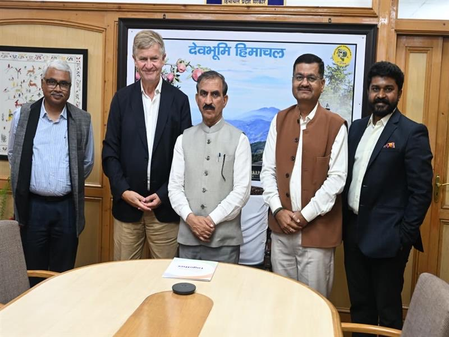
Former UN Environment Programme Executive Director Erik Solheim commended Himachal Pradesh for showcasing the integration of climate action with economic growth. Solheim, impressed by the state’s focus on creating income avenues for farmers while safeguarding the delicate Himalayan environment, highlighted Himachal Pradesh’s commitment to ensuring that climate initiatives yield tangible benefits for its populace.
Solheim praised the HIM EVERGREEN Project, recently launched in the state, which aims to assist over 150,000 smallholder farmers in adopting boundary plantations and climate-smart farming techniques. This initiative is projected to potentially generate more than $60 million in additional revenue for farming communities through South Asia’s primary carbon company in the forthcoming years.
One notable endeavor is the introduction of an indigenous biochar program that will transform approximately 9,000 tons of pine needles annually into biochar, bio-oil, and wood vinegar. This initiative, addressing the issue of forest fires caused by pine needle accumulation, is a collaborative effort involving local communities, the Himachal Pradesh Forest Department, and ProClime, aiming to produce high-quality carbon credits and convert challenges into opportunities.
Solheim expressed anticipation for the expansion of these projects throughout India and globally, emphasizing the significance of addressing the forest fire risk associated with pine needles in Himachal Pradesh. According to Forest Department data, 22% of the state’s forest area is susceptible to fires, with pine forests being a primary hotspot during the summer due to the flammability of shed pine needles containing turpentine oil.
