


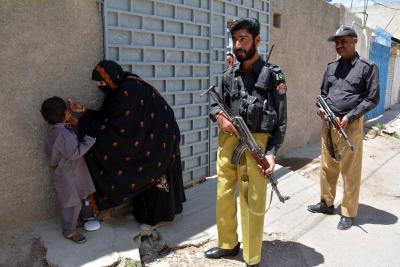
Frontline health workers in Pakistan are tackling polio in a highly violent security environment, hindering the country’s efforts to eliminate the disease. Recent attacks during polio vaccination campaigns have resulted in casualties, including the death of a police officer and injuries to others in the Khyber Pakhtunkhwa province.
The challenging conditions faced by health workers highlight the complexities of Pakistan’s fight against polio, one of the two remaining countries where the disease is endemic. Despite significant progress in reducing polio cases, the presence of violence poses a significant obstacle to achieving complete eradication.
Incidents such as the recent attack in Balochistan, where a police official was injured while protecting a polio vaccination team, underscore the risks faced by those involved in the vaccination campaigns. The ongoing violence, including targeted attacks on vaccination teams, threatens to undermine the progress made in combating polio in the region.
The resurgence of militant groups like Tehrik-e-Taliban Pakistan (TTP) has further complicated the situation, with past attacks on polio workers contributing to a climate of fear and insecurity. The intersection of terrorism and public health efforts in Pakistan underscores the urgent need for enhanced security measures to protect frontline workers and ensure the success of polio eradication initiatives.
The Global Polio Eradication Initiative has reported a rise in poliovirus cases in Pakistan and Afghanistan, highlighting the ongoing challenges in controlling the disease. With the majority of attacks occurring in regions with high polio prevalence, the safety of health workers remains a critical concern in the battle against polio.
