


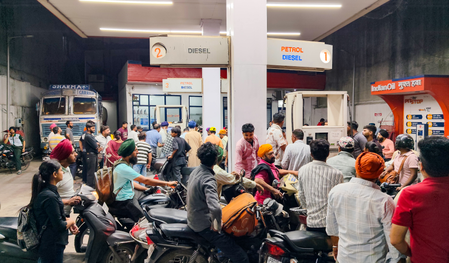
Despite the West Asia conflict and rising Brent crude oil prices due to the closure of the Strait of Hormuz, fuel prices in India have remained stable. This is in contrast to many other countries where fuel prices have surged by up to 85 percent. Data from Kotak reveals a significant difference between India and other nations, with consumers elsewhere facing substantial fuel price hikes this year.
On the diesel front, several countries have experienced notable price increases in recent months, attributed to geopolitical tensions. The UAE saw an 85 percent rise, while Australia and the United States witnessed increases of over 65 percent and 62 percent, respectively. In contrast, India has maintained diesel prices at Rs 87.6 per litre since January, showing no change despite global uncertainties.
Petrol prices in India have also remained steady at Rs 94.7 per litre, indicating a similar trend of price stability. While neighboring Pakistan saw a 44 percent surge in petrol prices, the United States and the UAE followed with increases of 42 percent and 36 percent, respectively. Other countries like Canada, Sri Lanka, and China experienced up to a 34 percent rise in petrol prices.
The consistency in fuel prices in India underscores the impact of policy interventions and the pricing strategies of public-sector oil marketing companies (OMCs). Despite fluctuations in global fuel markets, Indian consumers have been shielded from immediate price hikes influenced by international trends. State-run OMCs have taken steps to mitigate losses by negotiating discounted prices with refineries, particularly amidst a freeze on retail fuel prices.
Macquarie, a leading brokerage firm, highlighted the challenges faced by India’s oil marketing companies, estimating losses of Rs 18 per litre on petrol and Rs 35 per litre on diesel at current crude pricing levels. The report emphasized that a $10 per barrel increase in crude prices results in additional marketing losses of about Rs 6 per litre.
