


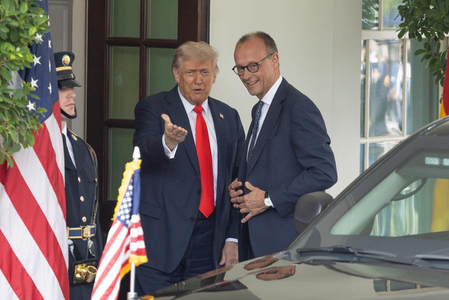
German Chancellor Friedrich Merz stated that despite recent sharp exchanges over the Iran conflict, his personal rapport with US President Donald Trump remains positive. Merz emphasized the need for a prompt resolution to the Iran conflicts, citing significant repercussions faced by Germany and Europe. Trump, responding to Merz’s criticism of US military engagement in Iran, dismissed Merz’s understanding and concerns about Iran’s nuclear ambitions.
Merz, speaking at a school event in North Rhine-Westphalia, expressed doubts about the US strategy in the Iran war, highlighting the challenges of entering and exiting such conflicts. He reiterated Germany’s willingness to assist in securing the Strait of Hormuz and restoring global oil supplies post-war. Despite the offer, Merz clarified that Germany would only engage after cessation of combat operations.
Following joint US-Israel attacks on Iran and subsequent retaliatory actions, a ceasefire was achieved but talks in Islamabad failed to yield an agreement between Iran and the US. This impasse led to a US blockade on the Strait of Hormuz, causing disruptions that spiked energy prices. Brent crude surpassed $107 per barrel due to the heightened tensions in the region.
