


The government has earmarked Rs 544.15 crore for the Crop Residue Management (CRM) scheme for 2026-27, with an initial installment of Rs 272.07 crore already disbursed, as per the Agriculture Ministry. Launched in 2018-19 to address stubble burning issues, the scheme has provided a total of Rs 4,266.47 crore in financial aid to Punjab, Haryana, Uttar Pradesh, Madhya Pradesh, and the Indian Council of Agricultural Research (ICAR).
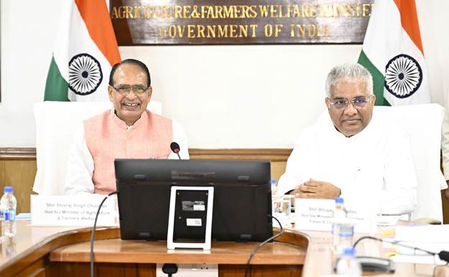
More than 3.54 lakh crop residue management machines have been distributed in the states, and over 43,500 Custom Hiring Centres have been set up with this assistance, reports the Agriculture Ministry. Agriculture Minister Shivraj Singh Chouhan and Minister for Environment, Forest and Climate Change, Bhupender Yadav, led a high-level inter-ministerial meeting to discuss stubble management and long-term solutions.
The meeting assessed the progress of the CRM scheme and the readiness of states to manage paddy stubble effectively during the upcoming harvesting season. Stubble burning not only harms the environment but also impacts soil fertility, beneficial insects, and public health due to pollution, emphasized the Agriculture Minister.
States have set ambitious targets for the current year, aiming to distribute over 46,000 crop residue management machines, establish 910 Custom Hiring Centres, and develop 141 stubble supply chain projects. Efforts are underway to manage an estimated 2.762 crore tonnes of stubble during the paddy harvesting in 2026, as per the action plans reviewed during the meeting.
The Central Government, state governments, ICAR institutions, Agricultural Science Centres, local bodies, and farmers have collectively reduced stubble burning incidents significantly in recent years, noted Chouhan. Both ministers highlighted the importance of enhancing the ex-situ utilization of stubble through biomass power plants, compressed biogas (CBG) units, ethanol production plants, and pellet manufacturing units to create a sustainable market for stubble and convert agricultural residue into economic assets.
