


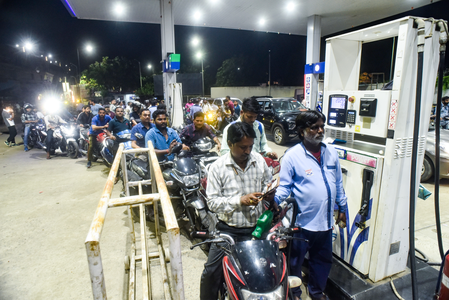
The government has reduced excise duties on petrol and diesel by Rs 10 per litre each, setting them at Rs 3 per litre for petrol and zero for diesel. This move aims to soften the blow of rising global oil prices. Additionally, exemptions on duties for fuel exports and supplies to foreign-going aircraft have been granted.
Amid concerns of a potential price surge due to the global energy crisis sparked by the US-Israel conflict with Iran and the resulting blockade of the Strait of Hormuz, the excise duty reduction comes as a relief. Oil marketing companies (OMCs) are anticipated to absorb this reduction to counter their increasing losses, which currently stand at around Rs 48.8 per litre due to high global crude prices.
Furthermore, the government has revoked a previous 2022 notification and provided customs duty relief on imported aviation turbine fuel (ATF). As global oil prices witness a decline, Brent crude futures dropped by 2.29% to $105.53 per barrel, while US WTI futures fell by 2.54% to $92.08 as of 8:50 am.
The government has assured that India’s petroleum and LPG supply remains secure and stable, urging citizens not to be misled by misinformation campaigns causing unwarranted panic. With 74 days of total reserve capacity and around 60 days of actual stock cover, including crude and product stocks along with strategic storage in caverns, India stands well-prepared even amidst the ongoing Middle East crisis.
India’s Petroleum Ministry emphasized that there is an ample supply of petrol, diesel, and LPG across the country, ensuring nearly two months of steady supply for every citizen regardless of global developments. The ministry dismissed claims of inadequate reserves, highlighting that India’s next two months of crude procurement are secured, making the quantity in strategic cavern storage a secondary concern in the current supply scenario.
