


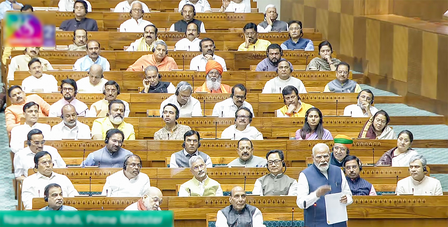
The government sources emphasized significant aspects of the women’s reservation bill being deliberated in the Lok Sabha. Among the highlighted features are a 50% increase in Lok Sabha seats, vertical reservation for SC/ST women, and the concept of quota within quota. If the bills on women’s reservation and delimitation pass through Parliament, the number of Lok Sabha seats in Tamil Nadu is set to rise from 39 to 59. The ruling DMK in Tamil Nadu faced criticism for allegedly misguiding the public on the proposed legislation, with warnings of repercussions for their actions.
The proposed increase in Lok Sabha seats is not limited to Tamil Nadu but extends to other states as well. According to government sources, if the bill is enacted, states like Uttar Pradesh, Bengal, Kerala, and Gujarat will witness a surge in the number of seats. The demarcation of constituencies post-delimitation will be based on the 2011 Census, a move aimed at expediting the implementation of the quota system before the 2029 general elections. Additionally, Assembly constituencies are also expected to see a 50% rise, potentially reaching 6,186 from the current 4,123 seats.
Minister of State for Law and Justice Arjun Ram Meghwal outlined the forthcoming changes, stating that all states’ Lok Sabha seats will undergo a 50% increment to facilitate the implementation of the women’s quota and related delimitation. The Women’s Reservation Bill, passed in 2023, mandates a 50% increase in Lok Sabha members, with 272 seats reserved for women, constituting one-third of the House’s strength. Male MPs and states will not face any reduction in representation, ensuring continuity in their current numbers.
Prime Minister Narendra Modi, participating in the Lok Sabha debate on the Constitution (One Hundred and Thirty-First Amendment) Bill, 2026, expressed optimism about the transformative impact of the Women Reservation Bill. He highlighted the bill’s potential to reshape the political landscape by involving half of the nation’s population in decision-making processes.
