


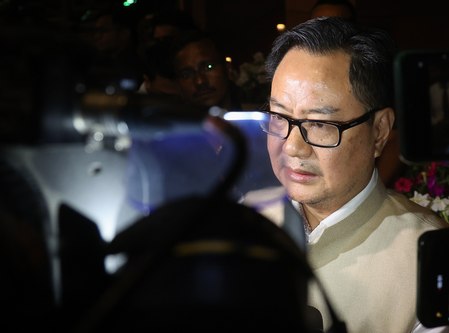
In a move to showcase political unity amidst escalating tensions in West Asia, the government organized an all-party meeting to update opposition and allied parties on the Iran, Israel, and United States conflict. Union Minister Kiren Rijiju, briefing the media post-meeting, lauded the detailed and fruitful discussions that emphasized bipartisan cooperation. The government shared a comprehensive overview of the crisis and addressed queries from opposition members, fostering a sense of national solidarity.
Rijiju highlighted that the session enabled the government to offer in-depth explanations on critical matters like energy security, particularly regarding gas and petroleum supplies via the Strait of Hormuz. He reassured that India has secured four ships, satisfying the concerns of opposition members. The meeting saw party leaders expressing their viewpoints and apprehensions about the escalating conflict, aiming to align on a unified stance during crises.
The gathering underscored the importance of national unity, with Rijiju emphasizing that the government’s transparency and responses aimed to unite the opposition during challenging times. He stressed the Prime Minister’s call for unity across the country, emphasizing the significance of conveying a message of solidarity from the Parliament. Discussions encompassed government actions and opposition inputs, with a focus on clarifying doubts and addressing suggestions to navigate the crisis effectively.
Rijiju confirmed the broad participation of representatives from major political parties in the meeting, except for the Trinamool Congress (TMC), which was absent. He noted that the TMC cited other commitments for their non-attendance, while other significant opposition and ruling parties actively engaged in the all-party dialogue. The consultation reflects India’s vigilance amid concerns over the West Asia conflict, with a keen eye on developments impacting energy supplies, trade, and the safety of Indian nationals in the region.
