


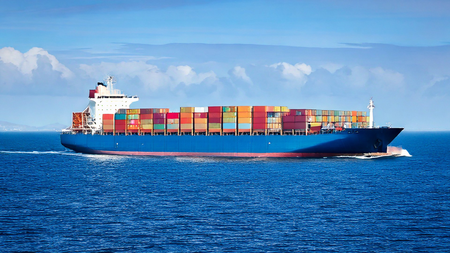
The government has implemented customs and logistics facilitation measures to assist exporters dealing with cargo affected by the shutdown of the Strait of Hormuz due to the Middle East conflict. These measures aim to help exporters manage stranded or returned cargo by easing storage and handling costs. The Central Board of Indirect Taxes and Customs (CBIC) has issued a circular allowing shipping lines to submit fresh arrival manifests at the port of landing, with mandatory 100% examination for containers with tampered seals.
The circular mandates that shipping lines file a Sea Arrival Manifest (SAM) at the port of docking if a vessel returns to a different Indian port without visiting a foreign destination. This process involves using a dummy port code in the system for such instances. Additionally, exporters are now permitted to bring returned cargo back into the domestic supply chain after verification, known as “Back to Town” clearance.
To prevent procedural issues, steps are being taken to recover export incentives if already disbursed and to cancel shipping bills post-export manifest filing. The Customs Department is temporarily expanding international transshipment until March 31, allowing movement of less-than-container load (LCL) cargo from all notified ports and airports under specific safeguards. Moreover, temporary unloading and storage of liquid bulk and break-bulk cargo diverted to Indian ports are permitted under strict customs supervision to prevent domestic market diversion.
Container Corporation of India (CONCOR) is offering relief measures at its inland container depots (ICDs) for export containers stuck in transit. CONCOR is providing additional free storage, discounts on plug-in charges for reefer containers, reduced wharfage charges for warehouse-stuffed cargo, and waived terminal fees. The company has also announced discounts on rail freight for containers returned from ports to ICDs, all applicable to cargo and containers handled in March.
