


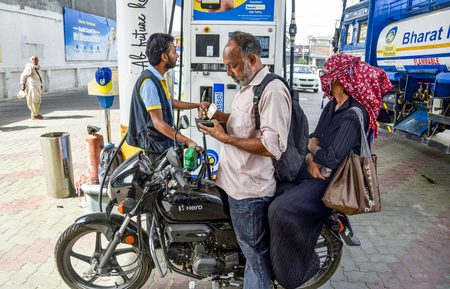
The government has managed to limit the increase in petrol and diesel prices to 4.4%, the lowest among major economies, while maintaining the cost of domestic liquefied petroleum gas stable. This was achieved by reducing excise duty and directing oil companies to absorb the losses incurred due to the surge in global crude oil prices exceeding $100 per barrel.
Public sector oil companies have taken on under-recoveries amounting to Rs 24,500 crore on petrol and diesel to prevent price hikes, before eventually implementing a Rs 3.91 per litre increase in two phases. The government has also absorbed Rs 30,000 crore in revenue loss from excise duty reduction on petrol and diesel, while oil companies faced losses of Rs 24,500 crore on petrol and diesel and an additional Rs 40,000 crore on maintaining the price of liquefied petroleum gas for domestic users.
India’s oil marketing firms raised petrol and diesel prices by Rs 3.91 per litre in two increments. The Central excise component of petrol and diesel prices remains consistent across all states, with variations in pump prices due to state-imposed value-added taxes. Notably, states like Telangana, Kerala, Karnataka, and Tamil Nadu have higher pump prices compared to states like Gujarat, Uttar Pradesh, Delhi, Haryana, Goa, and Assam.
An Indian Oil official highlighted that the Rs 3.91 price hike, which only partially offsets the increase in crude oil costs, was implemented after 76 days of complete absorption of costs by public sector oil companies. In contrast, many other countries have raised petrol and diesel prices by significant margins in response to the surge in global crude oil costs, with some countries witnessing hikes of up to 90%.
