


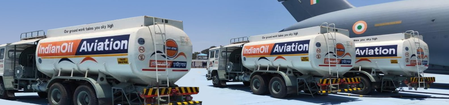
The government announced that despite a significant rise in aviation turbine fuel (ATF) prices, domestic airfares are expected to increase moderately. ATF prices in India, deregulated since 2001, are revised monthly based on global benchmarks. To mitigate the impact, public sector oil marketing companies, in consultation with the Ministry of Civil Aviation, have implemented a partial and gradual increase to shield domestic air travel costs.
Domestic airlines will experience a limited hike of around 25%, approximately Rs 15 per litre, rather than passing on the full global price increase to passengers. On the other hand, airlines operating on international routes will bear the full brunt of the ATF price surge, aligning with global market trends. Union Civil Aviation Minister Ram Mohan Naidu emphasized that this measured approach aims to safeguard passengers and the aviation industry.
Minister Naidu highlighted that this strategy will prevent sharp fare spikes, alleviate pressure on domestic airlines, and maintain stability in the aviation sector. Additionally, the decision is expected to facilitate cargo movement, sustain crucial air connectivity for trade, and benefit the broader economy. The move comes amidst soaring global crude oil prices, driven by tensions in West Asia and disruptions in the Strait of Hormuz, a vital global energy trade route.
The recent increase in aviation turbine fuel (ATF) prices in the national capital, while noticeable, is not as drastic as initially reported. Indian Oil Corporation clarified that ATF prices have risen by approximately 8.5%, contrary to the previously indicated 115%. Presently, the cost of jet fuel stands at around Rs 1.04 lakh per kilolitre.
