


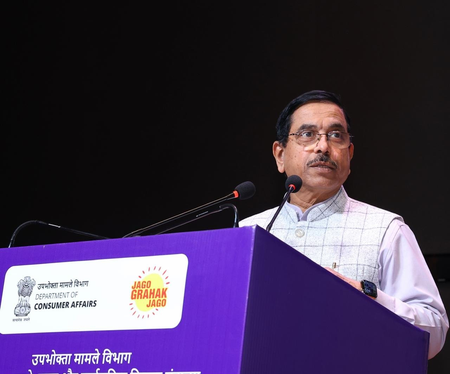
The government has introduced a new BIS Standard for incense sticks (agarbatti) aimed at improving consumer safety, indoor air quality, environmental sustainability, and regulatory adherence. Union Minister Pralhad Joshi unveiled the “IS 19412:2025–Incense Sticks (Agarbatti)” Specification on the occasion of ‘National Consumer Day 2025’. This standard prohibits the use of certain insecticidal chemicals and synthetic fragrance substances in agarbattis to mitigate potential risks to human health and the environment.
India, being the largest producer and exporter of agarbattis globally, has an industry worth approximately Rs 8,000 crore annually, with exports amounting to about Rs 1,200 crore to over 150 countries. The agarbatti sector plays a crucial role in supporting a vast network of artisans, MSMEs, and micro-entrepreneurs, particularly in rural and semi-urban regions, offering substantial employment opportunities, especially for women. The newly introduced “IS 19412:2025” outlines a list of prohibited substances for use in agarbattis, including insecticidal chemicals like alethrin, permethrin, cypermethrin, deltamethrin, and fipronil, as well as synthetic fragrance intermediates such as benzyl cyanide, ethyl acrylate, and diphenylamine.
The ministry emphasizes that many of these restricted or banned substances have adverse effects on human health, indoor air quality, and ecological well-being, leading to the necessity of a dedicated Indian Standard for Agarbattis. The standard categorizes Agarbatti into machine-made, hand-made, and traditional masala agarbattis, setting requirements for raw materials, burning quality, fragrance performance, and chemical parameters to ensure the production of safer products with consistent quality for consumers. Products meeting this standard will bear the BIS Standard Mark, empowering consumers to make informed and confident choices.
The implementation of IS 19412:2025 is anticipated to enhance consumer trust, encourage ethical and sustainable manufacturing practices, safeguard traditional livelihoods, and expand the global market reach of Indian agarbatti products, as per the ministry’s statement.
