


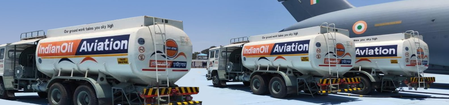
The government has established a basic price of Rs 86.32 per litre for aviation turbine fuel (ATF) for domestic airlines over the next three years. This initiative, part of a new price stabilisation scheme, aims to assist airlines in maintaining financial viability and ensuring affordable passenger tickets amidst rising international prices due to the Middle East crisis. Airlines participating in the scheme will adhere to the fixed free-on-board (FOB) benchmark price, covering airport charges, oil company margins, and applicable taxes, resulting in a final selling price of about Rs 115 per litre in Delhi, Rs 114.50 in Mumbai, and Rs 139 in Chennai, as per government officials.
Under this voluntary scheme, airlines not opting in will be charged based on the prevailing international rate, currently around Rs 142 a litre. The Ministry of Civil Aviation Director, Rohit Raj, disclosed that the benchmark price stands at Rs 86.32 per litre for domestic operations at the FOB level and Rs 104.49 per litre for international operations. The government had maintained the ATF price at approximately Rs 105 per litre in Delhi, inclusive of taxes and other charges, for more than two months post the Iran war to ensure affordable airfares and sustain airline operations to prevent job losses.
To address the financial strain on oil market companies, the government introduced the new scheme. The Union Cabinet has sanctioned a one-time budgetary support mechanism of up to Rs 10,000 crore to offer ATF price stabilisation support to scheduled Indian airlines. This decision, made in the public interest, aims to safeguard air connectivity, ensure stability in air services, and shield passengers from the impact of volatile global fuel prices due to the West Asia crisis, according to an official statement.
The approved mechanism, designed as a temporary and self-correcting arrangement, involves the government providing interest-free advances to oil marketing companies. This enables them to supply ATF to participating Indian airlines at predetermined and stable prices for both domestic and international operations. In instances where international ATF prices exceed the benchmark level, the corpus will compensate OMCs for the difference. Importantly, during periods of fuel price moderation, any differential amount will be recovered from OMCs and returned to the Consolidated Fund of India through a transparent true-up mechanism.
ATF constitutes a significant portion of airline operating costs, and the surge in international fuel prices, combined with extended flight paths for Indian carriers on various international routes, has intensified pressure on airline operations. The approved mechanism is expected to offer enhanced predictability in fuel costs through a fixed-price arrangement, allowing airlines to efficiently plan their operations and continue serving passengers across domestic and international networks.
