


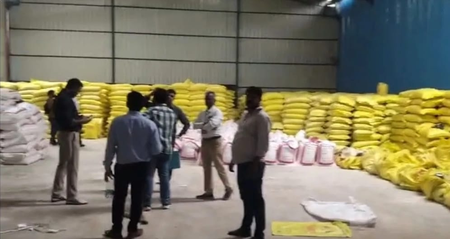
The government is set to maintain a significant fertiliser subsidy outgo of about Rs 1.9 lakh crore in FY27, emphasizing the importance of affordable and accessible fertilisers, as per a report. Fertiliser sales volumes are projected to increase steadily by 1 to 3 percent year-on-year in FY27, aligning with historical patterns. The report highlights that higher Nutrient-Based Subsidy rates for the Rabi season of FY26 will benefit local NPK manufacturers, but the profitability of Di-ammonium Phosphate imports is uncertain due to high global prices.
The Nutrient-Based Subsidy (NBS) structure falls short of fully bridging the cost gap for importers, raising concerns. ICRA anticipates that the allocated subsidy for P&K fertilisers in FY26 might be insufficient, necessitating additional funding to cover shortfalls. Varun Gogia, Assistant Vice President & Sector Head at ICRA, expects the profitability of P&K fertilisers to remain steady, with the government likely to maintain remunerative subsidy rates under the NBS scheme to ensure an ample supply of non-urea fertilisers for farmers.
The government is anticipated to revise energy norms and fixed costs for urea units by the fiscal year-end, impacting the profitability of urea units moving forward. The proposed transition of fertiliser subsidies to a Direct Benefit Transfer (DBT) model by the CII aims to enhance accountability and encourage balanced fertiliser usage. Prime Minister Narendra Modi recently initiated a major ammonia-urea fertiliser project in Assam’s Dibrugarh district, with an investment of Rs 11,000 crore.
