


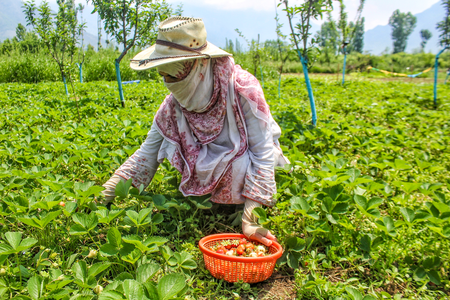
The National Mission for Sustainable Agriculture (NMSA) was initiated by the government in 2014-15, with Rs 2,119.84 crore allocated under the Rainfed Area Development (RAD) scheme. This initiative has covered 8.50 lakh hectares and benefited 14.35 lakh farmers through the Integrated Farming System. Since 2015-16, the Per Drop More Crop (PDMC) scheme has covered about 109 lakh hectares, with Rs 26,325 crore released as central assistance.
Under the Soil Health Management program, 97.53 lakh soil samples were collected and 92.87 lakh tested in 2025-26. Additionally, 25.79 crore Soil Health Cards have been generated since 2015 to provide guidance on balanced nutrient management. Launched in 2015, the Soil Health Card (SHC) Scheme is a key advisory tool for farmers under the NMSA, offering crop-specific nutrient recommendations.
An evaluation by NITI Aayog in 2025 revealed that the Soil Health Card scheme has helped rectify nutrient imbalances, notably reducing excessive urea use and enhancing agricultural productivity. The scheme has also furthered the goals of Integrated Nutrient Management (INM), with a significant 68.5% of surveyed farmers noting substantial soil health improvements from recommended practices.
Between 2014 and 2025, the National Agricultural Research System introduced 2,996 climate-resilient crop varieties. The NMSA, designed to address climate variability’s adverse effects on agriculture, was integrated into the “Green Revolution-Krishonnati Yojana” umbrella scheme from 2018-19. Subsequent restructuring in 2022-23 saw its inclusion under the Pradhan Mantri Rashtriya Krishi Vikas Yojana (PMRKVY), emphasizing a consolidated approach to sustainable, climate-resilient agricultural development.
