


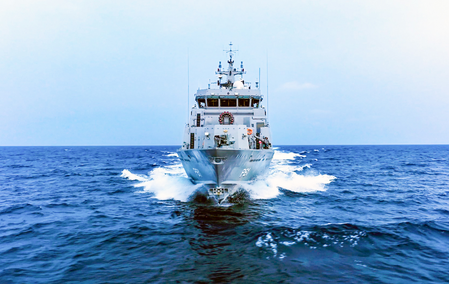
Kolkata, Aug 19 (IANS) Aiming at reducing greenhouse gas emissions from the maritime sector, the Central Government has released a draft roadmap for promoting the progressive adoption of low-carbon and renewable marine fuels in line with the National Maritime Decarbonisation Policy Framework (NMDPF), the National Policy on Biofuels, 2018, and India’s broader maritime decarbonisation objectives.
“Biofuels, particularly suitable drop-in biofuels and their blends with conventional marine fuels, provide an immediate and practical pathway for reducing lifecycle greenhouse gas emissions associated with marine transportation without requiring substantial modifications to existing shipboard fuel systems,” a document released by the Directorate General of Marine Administration (DGMA) on Wednesday says.
In order to provide a predictable transition pathway for the maritime industry, promote the availability of sustainable marine biofuels and progressively reduce the carbon intensity of vessels operating in Indian coastal waters, the DGMA has decided to introduce a phased framework for the use of biofuel blends in marine fuels, it says.
The objective is to promote the use of renewable and lower-carbon marine fuels; reduce lifecycle greenhouse gas emissions from coastal shipping; develop and strengthen domestic production, supply and bunkering infrastructure for sustainable marine biofuels; facilitate a smooth transition towards low- and zero-carbon marine fuels; and support implementation of the National Maritime Decarbonisation Policy Framework.
The order to use blended fuel shall apply to all vessels engaged in Indian Coastal Trade, irrespective of flag, which are required to obtain or operate under a licence or permission for engagement in the coastal trade of India.
“The requirements of this Notice shall apply to vessels using the following conventional marine fuels: Marine Gas Oil (MGO); Very Low Sulphur Fuel Oil (VLSFO); and Fuel Oil (FO), including applicable residual marine fuel grades used for propulsion or auxiliary machinery. The requirements shall apply, as applicable, to shipowners, ship managers, operators, charterers, masters, bunker suppliers, fuel producers/blenders and other stakeholders involved in the procurement, blending, supply, bunkering and use of marine fuel by vessels engaged in Coastal Trade,” the document says.
According to it, a biofuel is a fuel oil which is derived from biomass and hence includes, but is not limited to, processed used cooking oils, fatty-acid-methyl-esters (FAME) or fatty-acid-ethylesters (FAEE), straight vegetable oils (SVO), hydro-treated vegetable oils (HVO), glycerol or other biomass-to-liquid (BTL) type products.
The DGMA has proposed a “10% Biofuel Blend”. This means that homogeneous marine fuel should contain not less than 10% biofuel by volume. It has explained that “sustainable biofuel” means biofuel produced from eligible feedstock through a recognised or approved production pathway and supported by appropriate sustainability documentation or certification demonstrating its origin, traceability and lifecycle greenhouse gas characteristics.
“With effect from January 1, 2028, all vessels engaged in Indian Coastal Trade are encouraged to use biofuel blends containing up to 10% biofuel by volume with MGO, VLSFO or FO, as applicable, subject to fuel availability, compatibility, safety, engine/equipment manufacturer’s recommendations and compliance with applicable statutory requirements. During this period, shipowners/operators/charterers should progressively establish arrangements for procurement of compliant biofuel blends; fuel compatibility and stability assessment; onboard fuel management and storage arrangements; crew familiarisation and training; monitoring of fuel consumption and machinery performance; and maintenance of appropriate records for demonstrating the use of biofuel blends,” it has said.
With effect from January 1, 2029, every vessel covered under the notice and engaged in Indian coastal trade shall use, for propulsion and auxiliary machinery, marine fuel containing not less than 10% biofuel by volume when operating under coastal trade, subject to the provisions relating to exemptions and exceptional circumstances contained in this notice, the DGMA says.
While vessels will have to arrange for additional tanks to carry biofuel, a ship shall not be considered compliant merely by carrying biofuel separately onboard without blending it with the applicable conventional marine fuel, unless specifically permitted by the Directorate under an approved alternative compliance arrangement.
–IANS
jg/uk
