


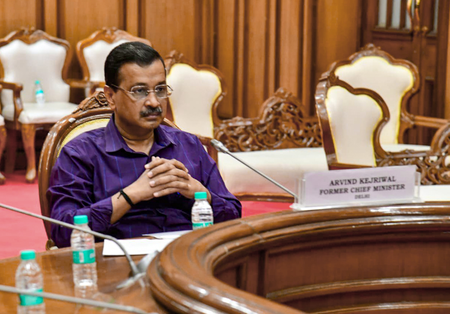
A group comprising senior advocates, academicians, former police officials, and members of the Bar has written to the Chief Justice of India (CJI) expressing concern over allegations made by former Delhi Chief Minister Arvind Kejriwal against a sitting judge of the Delhi High Court. They seek the initiation of suo motu proceedings to safeguard the judiciary’s dignity. The signatories emphasized that the accusations against the judge are unprecedented and raise significant worries about judicial propriety and institutional integrity.
The representation, directed to CJI Surya Kant, follows Kejriwal’s plea before the Supreme Court challenging the Delhi High Court’s decision not to transfer the CBI’s revision petition in the Delhi excise policy case from Justice Swarana Kanta Sharma’s Bench. The group stressed that openly attributing bias or motives to a sitting judge without substantiated grounds undermines judicial ethics and discipline. They highlighted that allowing such behavior unchecked could establish a dangerous precedent, enabling litigants to challenge court authority and diminish public trust in the justice system.
The group urged the CJI, as the custodian of the judicial system, to acknowledge the matter and take appropriate action within the legal framework. Additionally, in a separate representation requesting suo motu contempt proceedings against Kejriwal, the signatories warned that baseless allegations against judges could disrupt justice administration and weaken court authority. They emphasized that the independence of the judiciary is fundamental to the Constitution and the rule of law, relying on public perception of judges’ impartial discharge of duties.
Referring to the Contempt of Courts Act, 1971, the group highlighted that imputing motives to judges that scandalize the court or interfere with judicial proceedings constitutes criminal contempt. They expressed deep concern over attempts to publicly question a sitting judge’s impartiality and integrity. The signatories cautioned that if such actions go unaddressed, litigants might seek to pressure courts or discredit judges when rulings do not align with their interests. They stressed the importance of upholding respect for constitutional institutions and keeping the judiciary above political disputes or public criticism.
