


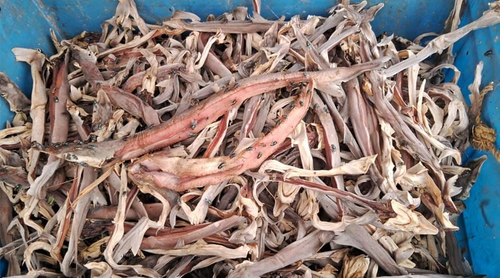
A surge in the global demand for shark fins and other protected marine species has prompted Indian experts to advocate for a new science-based approach to combat illegal marine wildlife trade. At a recent national workshop organized by ICAR-Central Marine Fisheries Research Institute, stakeholders emphasized the need to blend science, technology, fisheries management, and community involvement in marine conservation efforts.
The workshop, spanning three days, convened enforcement officials, marine scientists, conservationists, and policymakers from various parts of India to enhance the country’s response to crimes related to marine wildlife. Participants highlighted the escalating sophistication of illegal trade networks targeting marine species, stressing the necessity for enhanced surveillance, scientific identification methods, and coordinated enforcement across states.
Studies showcased at the workshop revealed that India witnessed 17 seizures involving illicit shark derivatives from 2010 to 2022, with shark fins comprising nearly 82% of the confiscated items. Over 15.8 tonnes of shark derivatives were confiscated during this period, with Tamil Nadu identified as a significant hub for such activities.
Manu Sathyan, a Divisional Forest Officer, pointed out that identifying protected marine species poses a major challenge in wildlife crime investigations. He emphasized the importance of collaboration between enforcement agencies and scientific bodies for precise species identification and forensic documentation.
Grinson George, Director of CMFRI, emphasized the necessity for robust legislation supported by technology-driven surveillance and scientific monitoring to effectively combat illegal marine trade. He highlighted the need for conservation models that balance ecological sustainability with societal requirements in marine ecosystems.
Dipankar Ghose, a senior biodiversity expert, highlighted the distinct nature of marine wildlife trade compared to terrestrial wildlife crimes, noting its close ties to the livelihoods of fishing communities. He stressed that sustainable conservation efforts must consider the socio-economic aspects of fisher communities alongside stringent enforcement measures.
Shoba Joe Kizhakudan, a scientist at CMFRI, underscored the importance of viewing marine conservation as both a fisheries and livelihood issue. She emphasized the critical role of ongoing communication with fishing communities for long-term conservation success. The workshop also delved into cutting-edge scientific tools like forensic shark fin identification, digital evidence collection for wildlife cybercrime, and monitoring techniques for corals, turtles, and marine mammals, underscoring the growing significance of science in safeguarding India’s marine biodiversity.
