


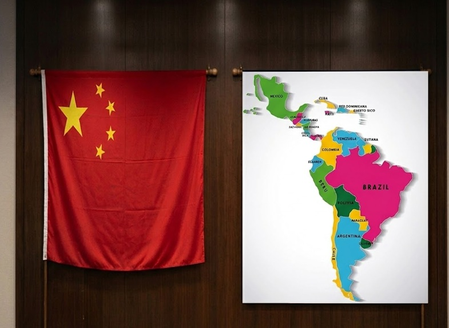
Latin American countries are under increasing pressure to improve their ability to negotiate, assess, and supervise projects associated with China. A report highlighted that China-related infrastructure initiatives in Latin America are posing challenges to existing oversight mechanisms during implementation. The accelerated pace of these projects is limiting opportunities for thorough technical evaluation, public scrutiny, and comprehensive oversight.
Critics argue that while expedited timelines may offer immediate political and economic advantages, they could also raise long-term concerns related to transparency, strategic reliance, and infrastructure governance. Analysts point out that the implementation speed of China-linked projects often surpasses the institutional processes of technical assessment, public engagement, and legislative supervision. This situation forces countries to align with the speed of external funding, as per the report.
Pamela Arostica, the director of the China and Latin America Network: Multidisciplinary Approaches (REDCAEM), emphasized that many China-linked projects in Latin America create challenges in maintaining proper oversight. The report also noted that projects and loans associated with China lack transparency and adequate environmental or governance safeguards. Some projects follow a “turnkey” approach, sourcing personnel and materials mainly from China, which reduces local involvement in critical sectors.
The rapid implementation pace of these projects limits the window for technical review and enhances China’s influence on economic and technological decisions in host nations. This situation raises concerns about institutional independence and strategic reliance. Additionally, China’s debt restructuring approach is seen as less adaptable, adding economic pressure on heavily indebted countries. The report highlighted that the proliferation of this China-driven model in Latin America continues to impact state governance and strategic decision-making.
Chinese companies have a significant presence in various strategic sectors across Latin America, particularly in resource extraction. They are extensively involved in activities such as copper extraction in Peru and lithium mining in Argentina and Chile. The report pointed out that the influence of China-linked firms in the region extends to multiple key sectors, affecting state management and strategic choices.
