


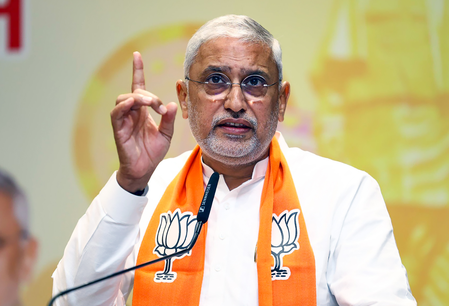
Gujarat BJP President Jagdish Vishwakarma criticized the Congress for obstructing the Women’s Reservation Bill, which aimed to enhance women’s political participation. He mentioned that despite being introduced under Prime Minister Narendra Modi’s leadership, the Bill was blocked by opposition parties. Vishwakarma expressed disappointment towards the Congress, stating that their actions hindered the progress of women in various fields. He highlighted the importance of empowering women in governance and development, emphasizing the need for equal opportunities at the national level.
Vishwakarma also praised the initiatives undertaken by the BJP government to support women, including schemes focusing on pregnancy, education, and economic empowerment. He mentioned programs like Drone Didi, Lakhpati Didi, and the Ujjwala scheme that contributed to strengthening women economically. Additionally, he discussed the government’s efforts towards tribal welfare, emphasizing the various initiatives implemented for the overall development of tribal communities, including investments in education and healthcare.
Furthermore, Vishwakarma highlighted the successful implementation of 50% reservation for women in local self-government bodies during Modi’s tenure as Chief Minister of Gujarat. He underscored the importance of providing women with equal participation in public life and extending similar opportunities at the national level. Vishwakarma also commented on the electoral scenario in Navsari district and across Gujarat, where a significant number of BJP candidates won uncontested seats, reflecting what he described as shortcomings in the opposition’s policies and approach.
Discussing development initiatives, Vishwakarma outlined the government’s efforts in providing essential amenities such as housing, drinking water through the ‘Nal Se Jal’ scheme, electricity, sanitation facilities, and agricultural support programs. He mentioned schemes like Kisan Samman Nidhi, Kisan Suryoday Yojana, and disaster relief packages that have directly benefited farmers and the wider population.
