


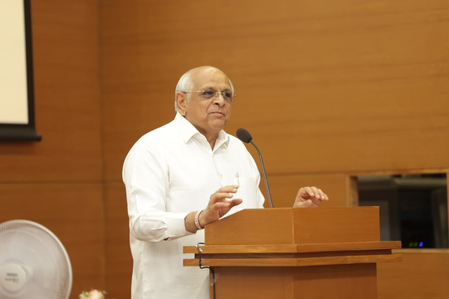
Gujarat Chief Minister Bhupendra Patel criticized the Emergency imposed on June 25, 1975, as an effort to suppress the Constitution’s essence and lead the nation towards dictatorship. Patel, on a social media platform, labeled the Emergency as a move to weaken democratic institutions for power gain. He emphasized that this dark period in India’s history saw the erosion of democratic foundations and restrictions on citizens’ freedoms. Patel highlighted the importance of observing “Samvidhan Hatya Diwas” to instill democratic values and constitutional respect in future generations.
The Chief Minister underscored that the Emergency era remains a somber chapter in independent India’s history due to the erosion of democratic principles and citizens’ rights. He stressed the significance of the Constitution in safeguarding the nation’s progress and citizens’ liberties. Patel paid tribute to those who resisted the Emergency, enduring hardships to uphold democratic ideals and restore normalcy. The Emergency, declared on June 25, 1975, by then President Fakhruddin Ali Ahmed on Prime Minister Indira Gandhi’s advice, lasted for 21 months until March 1977.
During the Emergency period, elections were suspended, press freedom was restricted, civil liberties were curbed, and numerous political figures, activists, and journalists were detained. This phase continues to be a crucial reference point in discussions concerning constitutional protections and democratic responsibility. Educational and constitutional bodies increasingly highlight the Emergency as a significant test for Indian democracy, particularly due to the suspension of fundamental rights during that period.
