


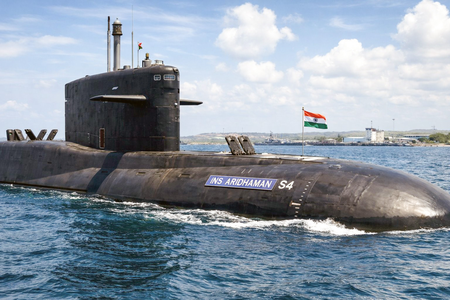
India has quietly achieved a milestone in its nuclear capabilities by potentially having nuclear warheads at sea, a feat that Pakistan is yet to match. This development marks a significant shift in the deterrence dynamics of the region, with India’s submarine operations shrouded in secrecy to enhance its strategic advantage.
With the commissioning of INS Arihant and the equipping of INS Arighaat with the K-4 missile, India is bolstering its Submersible Ship Ballistic Nuclear (SSBNs) fleet. The addition of INS Aridhaman and the anticipated arrival of INS Arisudan by 2027 further solidify India’s sea-based nuclear deterrent capabilities.
India’s move from storing nuclear warheads on land to deploying them on submarines at sea, as indicated by the Stockholm International Peace Research Institute, presents a challenge for adversaries. The ability to maintain a continuous patrol with nuclear-tipped missiles in the vast Indian Ocean renders such submarines virtually untargetable, reshaping the strategic landscape.
Pakistan’s sea-based nuclear capability, centered around the Babur-3 cruise missile potentially deployed on an Agosta-class submarine, falls short in comparison to India’s SSBNs. The limitations of diesel-electric submarines in maintaining long-range patrols with second-strike survivability highlight the disparity in sea-based nuclear deterrence between the two nations.
