


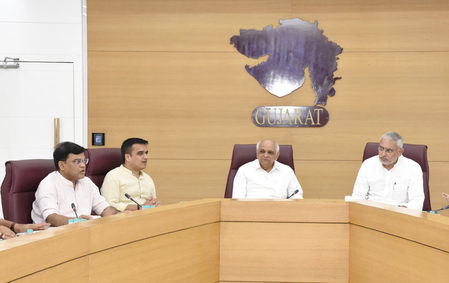
The Gujarat government has integrated its 20 most accessed public services into the ‘Digital Gujarat’ portal, requiring Aadhaar authentication to streamline service delivery and ensure benefits reach the right recipients. This decision, made during a Cabinet meeting chaired by Chief Minister Bhupendra Patel in Gandhinagar, aligns with recommendations from the Gujarat Administrative Reforms Commission. The move aims to enhance transparency, accuracy, and efficiency in citizen services.
Government spokesperson and Minister Jitu Vaghani highlighted that essential services like income certificates, caste certificates, non-creamy layer certificates, economically weaker section certificates, and ration card-related services are now part of the ‘Top-20’ high-volume category on the Digital Gujarat platform. To access these services, individuals must undergo Aadhaar authentication, either through a one-time password on their linked mobile number or biometric verification where available. Prior consent from applicants is necessary before initiating Aadhaar verification.
Vaghani emphasized that successful Aadhaar authentication eliminates the need for additional identity or residence documents, simplifying the process and making it paperless. Safeguards have been implemented to ensure service inclusivity, with alternative identity documents accepted for citizens without Aadhaar or facing authentication issues due to technical reasons. Data security measures include displaying only masked Aadhaar numbers with the last four digits visible when necessary, adhering strictly to UIDAI security guidelines.
The 20 services now available on the portal encompass a range of certificates and ration card services for both rural and urban applicants, covering income certificates, backward class certificates, Scheduled Caste and Scheduled Tribe certificates, economically weaker section (EWS) certificates, and various ration card-related processes such as corrections, new issuances, and documentation services.
