


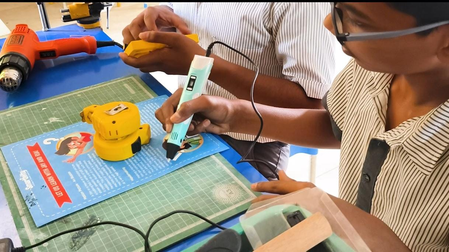
Students in Gujarat are participating in a state-wide initiative led by Chief Minister Bhupendra Patel to blend practical skills with academics, aiming to foster self-reliance. The program, targeting students from classes 9 to 12, integrates vocational training with traditional studies to prepare them for both employment and entrepreneurship. At Shree Chandrasinhji Higher Secondary School in Rajpara, Kotda Sangani Taluka, Rajkot district, pupils are engaging in hands-on training across 11 areas, including automobile, electrical work, and agriculture.
Narendrasinh Jadeja, a Trustee of the school, highlighted the comprehensive learning experience in vocational training, emphasizing a focus on agriculture due to the region’s farming association, alongside the addition of electrical training. A student shared their insights, mentioning the diverse aspects of agriculture and farming they are learning, such as production and cost efficiency.
Aligned with the National Education Policy-2020 and the National Skills Qualification Framework, vocational courses allow students to select subjects based on their interests, like four-wheeler service technician, agriculture, crop cultivation, and floriculture. These courses offer approximately 70% practical training alongside theoretical lessons, providing students with hands-on experience not only in school labs but also in utilizing tools and equipment for a holistic skill development approach.
The Gujarat government has significantly expanded vocational education throughout the state, with 558 Industrial Training Institutes (ITIs) now operational, benefiting over 6.5 lakh young individuals under the Mukhyamantri Skill Development Initiative. Specialized ITIs cater to women and persons with disabilities, offering short-term training in emerging sectors like automation and manufacturing. By integrating academic study with practical skills, the initiative aims to reduce reliance on conventional job markets, empowering youth to pursue immediate employment or self-employment post-education.
This initiative plays a crucial role in curbing school dropout rates in rural areas while equipping students with essential skills for self-reliance. Grant-in-aid schools have been supported with infrastructure development to establish vocational training labs and classrooms, ensuring modern learning facilities are accessible to students across Gujarat. Through the integration of skill development with education, Gujarat’s vocational program not only prepares students for employment but also nurtures entrepreneurial opportunities, fostering a generation capable of contributing to the state’s economic progress.
