


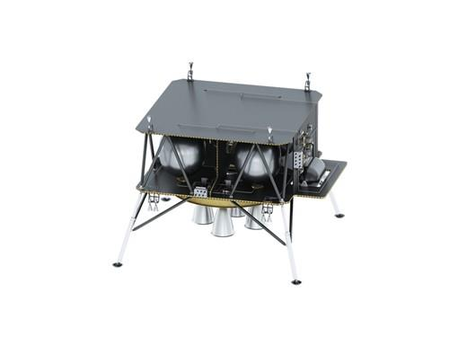
Hanwha Aerospace has secured a $71.5 million contract to develop the propulsion system for South Korea’s first lunar lander set for a 2032 launch. The company will handle the production, assembly, and testing of crucial propulsion components under an agreement with the Korea Aerospace Research Institute.
Since 1994, Hanwha Aerospace, a prominent South Korean aerospace and defense firm, has been instrumental in crafting spacecraft propulsion systems for the nation’s space initiatives. The technologies and infrastructure cultivated during the lunar lander project are anticipated to benefit future space exploration endeavors.
With over 30 years of experience in the field, a Hanwha Aerospace representative expressed the company’s commitment to enhancing South Korea’s autonomous lunar exploration capabilities. The Korea AeroSpace Administration (KASA) recently disclosed plans for a lunar communication orbiter launch in 2029 and a lunar lander mission in 2032 as part of its extensive space exploration roadmap.
KASA Administrator Yoon Young-bin outlined the agency’s strategy to utilize the Nuri rocket for the 2029 orbiter mission. The successful deployment of 13 satellites into orbit during the recent launch of the domestic space launch vehicle marks a significant milestone for the country’s space endeavors.
Deep-space communication technology acquisition through the lunar communication orbiter is crucial for future moon missions, given the communication challenges from the far side of the moon. KASA’s objective is to conduct at least one Nuri launch annually until 2032 to elevate the success rate to over 90% and introduce a reusable next-generation launch vehicle by 2035.
