


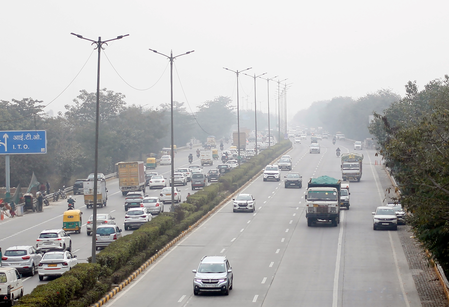
Haryana is intensifying its efforts for cleaner air in the National Capital Region (NCR) by introducing new electric buses and expanding the air quality monitoring network from 22 to 45 stations. The state is implementing the ‘No Pollution Under Control Certificate (PUCC), No Fuel’ policy and revamping about 1,000 km of urban roads. This comprehensive plan was reviewed by State Chief Secretary Anurag Rastogi under the Commission for Air Quality Management (CAQM).
To combat pollution effectively, Haryana plans to introduce 925 electric buses in cities like Gurugram, Faridabad, and Rohtak. Currently, 70 electric buses are operational, with orders placed for an additional 385 buses. The remaining buses will be procured in phases, aiming to reduce vehicular emissions and promote sustainable public transport.
Furthermore, Haryana is expanding its Continuous Ambient Air Quality Monitoring Station (CAAQMS) network to enhance air pollution monitoring. With 23 new stations being established, the total monitoring stations will increase to 45 in the NCR. The state aims to have the expanded monitoring network fully operational before September 30 to ensure real-time monitoring during the winter pollution season.
In a bid to control vehicular emissions, Haryana is gearing up for the ‘No PUCC, No Fuel’ initiative starting from October 1. Automatic Number Plate Recognition (ANPR) systems are being installed at all 2,780 fuel stations in NCR districts to verify pollution under control certificates electronically before fuel dispensing. The state is also focusing on enforcing regulations against end-of-life vehicles, with a substantial increase in impounding old vehicles and issuing no objection certificates for voluntary removal.
Under the Naya Safar Yojana, Haryana has announced a 100% motor vehicle tax concession for eligible vehicles, encouraging the replacement of older commercial vehicles with cleaner alternatives. The state is also progressing in industrial pollution control by connecting industries to online continuous emission monitoring systems and accelerating the installation of air pollution control devices where necessary.
