


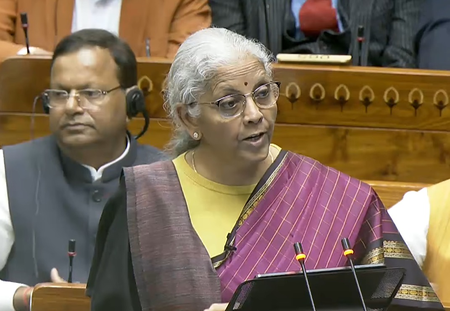
In a significant move towards achieving India’s net-zero goals, Finance Minister Nirmala Sitharaman has announced a substantial allocation of Rs 20,000 crore over the next five years for Carbon Capture, Utilisation, and Storage (CCUS) technologies in the Union Budget 2026-27. This funding is aimed at expediting the deployment of CCUS in challenging industrial sectors to help the country meet its climate targets while sustaining economic growth.
CCUS involves capturing carbon dioxide emissions from industrial sources, utilizing the captured CO2 in products like chemicals or enhanced oil recovery, or storing it underground permanently to prevent atmospheric release. This technology is vital for reducing emissions in sectors where renewables alone cannot eliminate them, such as power generation, steel production, cement manufacturing, refineries, and chemicals.
The finance minister highlighted that this allocation would aid in scaling up CCUS technologies and achieving higher readiness levels for end-use applications across these crucial sectors. This initiative aligns with the government’s CCUS roadmap introduced in 2025, which outlines strategies for technology advancement, pilot projects, and eventual commercial implementation.
The Rs 20,000 crore commitment signifies a practical shift in India’s decarbonization strategy, focusing on tangible solutions for emission-intensive industries rather than solely depending on renewable expansion. This funding is expected to encourage private sector involvement through public-private partnerships, technology localization, and job creation in green engineering and storage operations.
Industry stakeholders view this allocation as a boost to their sustainability endeavors and compliance with Environmental, Social, and Governance (ESG) standards. The proposal integrates with broader green infrastructure initiatives in the budget, such as high-speed rail corridors and inland waterways, indicating a comprehensive approach to sustainable development.
As the implementation details unfold, the success of this CCUS initiative will hinge on effective policy implementation, regulatory frameworks for carbon markets, and international collaborations for technology exchange. With this bold step, India aims to convert a climate challenge into an avenue for innovation and industrial resilience on the journey to Viksit Bharat.
