


Policymakers and industry experts emphasize the need for stronger India-EU collaboration in research, innovation, standards, and testing to facilitate the shift towards sustainable and connected mobility systems. This collaboration is part of the India-EU Trade and Technology Council (TTC) efforts, with a particular emphasis on green and clean energy technologies to enhance sustainable mobility and foster resilient innovation ecosystems.
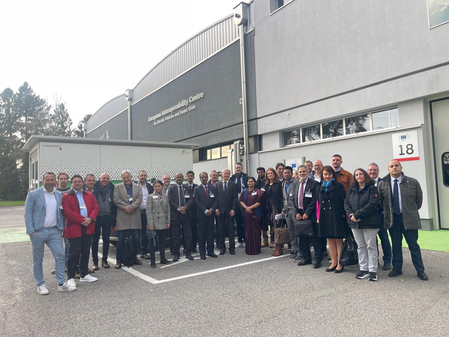
Recently, the second India-EU Workshop on Electric Vehicle (EV) charging technologies took place at the Joint Research Centre (JRC) in Ispra, Italy, from March 15-17. The workshop, a joint initiative by the Office of the Principal Scientific Adviser (OPSA) to the Government of India and the Directorate-General for Research and Innovation (DG RTD) of the European Commission, aimed to promote harmonized, interoperable, and future-ready EV charging ecosystems.
Various stakeholders, including policymakers, technical experts, standards bodies, testing and research institutions, and industry representatives from both India and the EU, participated in the workshop. Discussions revolved around developing pathways for advanced EV charging systems, vehicle-to-grid integration, bidirectional charging, and wireless power transfer. The program also featured visits to JRC’s EV and smart grid testing facilities to provide practical insights.
Dr. Rakesh Kaur, Adviser/Scientist-‘G’ at OPSA, highlighted the significance of India-EU cooperation in establishing reliable, interoperable, and forward-looking charging ecosystems for a seamless transition to clean mobility. Nienke Buisman, Head of Unit International Cooperation at DG RTD EC, and Dr. Christian Thiel, Head of Unit (Sen.) at JRC, echoed the importance of enhanced collaboration between India and the EU in research, innovation, standards, and testing to bolster sustainable and connected mobility systems.
