


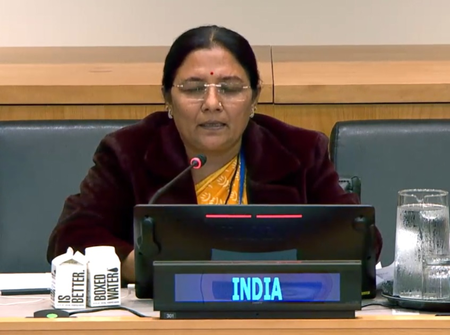
The India-Brazil-South Africa (IBSA) Fund has been instrumental in fostering South-South cooperation to empower women through development initiatives, as highlighted by leaders from the three countries. Established in 2004 as a collaborative effort between India, Brazil, and South Africa, the Fund has supported more than 50 development projects in nearly 40 countries, emphasizing women’s advancement.
Savitri Thakur, India’s Minister of State for Women and Child Development, lauded the Fund as a visionary initiative that has actively backed various projects aimed at women’s development. She emphasized this during an event celebrating the achievements of Women-Led Development and South-South Cooperation.
South Africa’s Minister for Women, Youth, and Persons with Disabilities, Sindisiwe Chikunga, underscored the profound impact of South-South cooperation on gender equality and women’s empowerment. She emphasized the crucial role of the IBSA Fund, especially in a time marked by challenges to multilateralism and conditional development finance.
The IBSA Fund is seen as a platform where emerging and developing economies can have a significant voice and be accountable to their populations, according to Chikunga. It signifies a shift towards a development model that prioritizes Southern agency, rejects dependency, and champions sustainable development, particularly for countries navigating post-colonial reconstruction.
India’s Permanent Representative P Harish stressed the importance of women’s empowerment in enhancing their contributions to productive economies. He highlighted the IBSA Fund as a reliable model of South-South solidarity, offering a demand-driven approach where partner countries identify their needs, aligning with the core principles of cooperation among Southern nations.
Brazil’s Vice Minister for Women, Thalia Barbosa Rodrigues Neves, emphasized the essential role of women in sustainable and democratic development. She cited instances where the IBSA Fund supported women in various regions, enabling them to enhance food production, access technology for family health, and strengthen their governance roles, underscoring the transformative impact of women-led development.
