


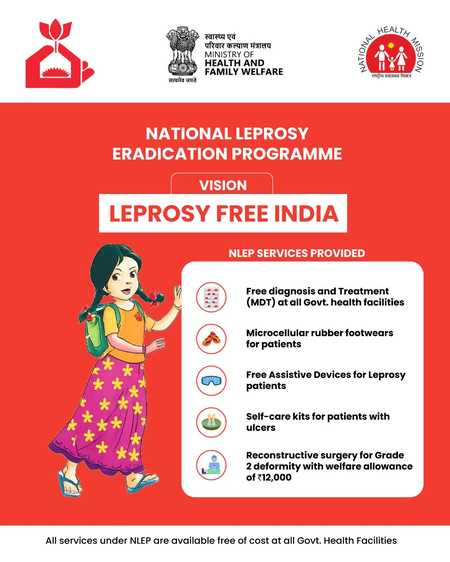
Free diagnosis and multi-drug treatment at public health hospitals in India are crucial in maintaining the country’s leprosy-free status, as highlighted by the government. National Leprosy Day is observed annually on January 30 in India, coinciding with the death anniversary of Mahatma Gandhi, to commemorate his efforts in supporting those affected by the disease.
The Health Ministry, through the National Leprosy Eradication Programme (NLEP), continues its mission towards a Leprosy-Free India by providing free diagnosis, treatment, and care services at government health facilities nationwide. The ministry emphasized the importance of collaborative efforts to eradicate stigma and ensure dignity and care for all individuals.
Leprosy, scientifically known as Hansen’s disease, is a chronic infectious condition primarily caused by Mycobacterium leprae bacteria, affecting various parts of the body including the skin, nerves, respiratory mucosa, and eyes. Despite the physical challenges and social discrimination faced by those with leprosy, the disease is treatable, and early intervention can prevent disabilities.
India officially achieved the elimination of leprosy as a public health concern in December 2005, with a prevalence rate of 0.57 per 10,000 individuals in 31 states/UTs and 638 districts as of March 2025. The NLEP’s current objective is to achieve “Zero Transmission, Zero Leprosy” by 2027 through strategies such as early detection, free multidrug therapy, and efforts to reduce stigma associated with the disease.
Under the NLEP, the government offers various services including free diagnosis and multidrug therapy at all government health facilities, provision of specialized footwear and assistive devices, self-care kits for ulcer patients, and reconstructive surgery for severe deformities. These services are provided free of charge to all individuals at government health facilities to ensure comprehensive care and support.
If left untreated, leprosy can lead to permanent disabilities, with transmission occurring through respiratory droplets from untreated cases during close contact. Leprosy is classified as a neglected tropical disease, prevalent in over 120 countries worldwide, with approximately 200,000 new cases reported annually.
