


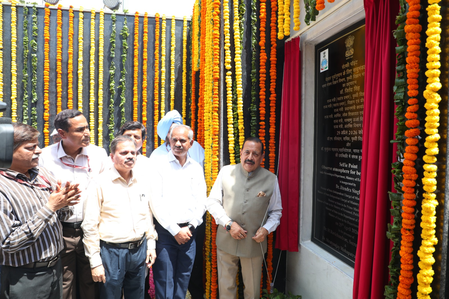
India has significantly grown its Doppler Weather Radar (DWR) network, increasing from 14 operational units to 50 since 2014, as stated by Union Minister of State Dr. Jitendra Singh. This expansion, covering more than 87% of the country, has notably enhanced the forecasting of cyclones, heavy rainfall, and thunderstorms. Dr. Singh highlighted the positive impact of this growth on the accuracy and credibility of weather predictions, attributing it to the government’s focus on strengthening weather and climate services.
The minister emphasized that the rapid expansion of the radar network is a result of the government’s commitment to enhancing weather services under Prime Minister Narendra Modi’s leadership. The improved infrastructure has not only increased the precision and accessibility of weather forecasts but has also bolstered public trust in the forecasting system. Dr. Singh noted the significant role of the government’s initiatives in fostering trust and reliance among the public, evident in the increasing use of IMD services for weather updates on mobile devices.
India’s upgraded forecasting capabilities are not only benefiting its own citizens but also extending support to neighboring countries, showcasing its commitment to regional cooperation and resilience. Dr. Singh highlighted that India’s forecasting ability now provides detailed insights on various weather parameters like rainfall intensity, precipitation types, hailstorm possibilities, and raindrop sizes, reflecting a significant advancement in meteorological services.
