


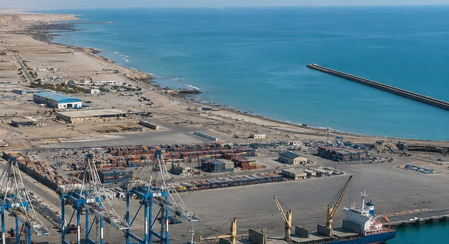
India is reevaluating its connectivity approach with Afghanistan by considering various trade and transport routes beyond Iran’s Chabahar Port. Recent geopolitical uncertainties have underscored the risks of depending solely on one gateway for regional access, prompting the need for a more resilient network of trade corridors. Chabahar Port has been pivotal in India’s West Asia policy for almost two decades, serving as a key link to Afghanistan and Central Asia due to the lack of reliable overland transit through Pakistan.
Despite the strategic importance of Chabahar, India is now exploring additional connectivity options to mitigate risks associated with relying heavily on a single transit route. The country has prepaid its full financial commitment of USD 120 million for the Chabahar project, emphasizing its significance. However, recent events have highlighted the vulnerabilities of this dependency, especially following tensions between the United States and Iran.
India is now looking at complementary connectivity options like the International North-South Transport Corridor (INSTC) and routes through Uzbekistan, Turkmenistan, and Kazakhstan to enhance Afghanistan’s access to Eurasian markets. These alternatives aim to reduce reliance on a single corridor and provide the redundancy needed for modern supply chains. Despite challenges such as infrastructure gaps and political uncertainties, these options could offer valuable diversification for trade routes.
The evolving India-Afghanistan relationship extends beyond connectivity and trade logistics, with a focus on agriculture as a priority area for cooperation. Afghanistan’s Minister of Agriculture, Irrigation, and Livestock, Mawlawi Ataullah Omari, highlighted the importance of modernizing the country’s farming sector during a recent visit to India. He emphasized the need for advancements in farm machinery, certified seeds, harvesting technology, crop protection, cold storage, packaging, and food processing to boost the agricultural sector.
