


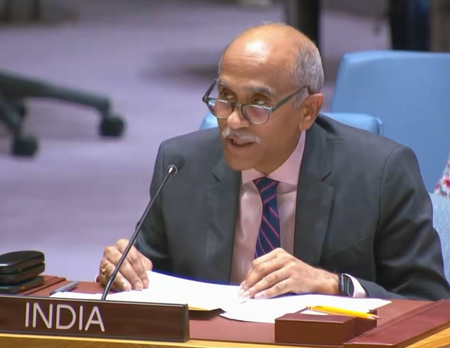
India’s Permanent Representative P. Harish emphasized the need for subnational provinces rich in resources to receive a fair share of benefits to prevent internal instability. Without directly naming Pakistan, he pointed out the consequences of neglecting this responsibility, particularly visible in Balochistan. The province, despite its resource wealth, remains among Pakistan’s poorest regions, leading to protests and insurgency due to unequal distribution of contributions.
Harish cautioned against a heavy-handed approach in governing resource-rich provinces, stating that such regions can become sources of insecurity spreading beyond borders. He stressed that national ownership and capacity-building are crucial for effective natural resource governance, emphasizing the role of sovereign states in managing resources transparently and accountably.
In a high-level debate on Natural Resource Governance, Harish highlighted the link between illicit resource exploitation, armed group financing, and prolonged conflicts. He underscored the importance of transparent resource governance for development and prosperity, urging for a focus on benefiting present and future generations through accountable management.
UN Secretary-General Antonio Guterres emphasized the need for countries and communities to benefit primarily from their own resources. He criticized the historical exploitation of Global South countries, where resources are extracted for external gain, leaving local communities to deal with environmental and socioeconomic challenges. Guterres called for closing the gap between state sovereignty over resources and practical sovereign rights, particularly addressing the sovereignty deficit in Africa resulting from colonial legacies and governance issues.
