


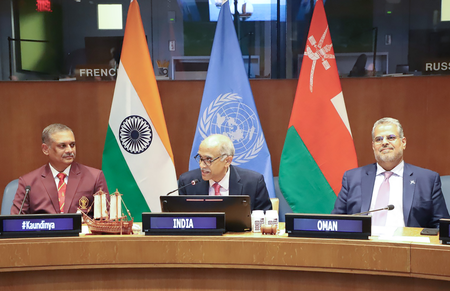
Industry Chamber PHDCCI announced that the India-Oman Comprehensive Economic Partnership Agreement (CEPA) will enhance India’s trade connections with the GCC and East Africa through strategic logistics infrastructure. This agreement aims to strengthen economic integration between the two countries by enhancing market access, benefiting exporters, professionals, and investors. Rajeev Juneja, President of PHDCCI, mentioned that reduced trade barriers will create new opportunities for MSMEs and service providers, especially in labor-intensive sectors like agriculture, food processing, pharmaceuticals, textiles, gems, and jewelry.
The CEPA ensures that 99.38% of India’s exports by value, including agriculture, processed food, marine products, textiles, gems, pharmaceuticals, engineering goods, electronics, automobiles, and footwear, will have duty-free access to the Omani market. Sectors like agriculture and processed foods will witness new opportunities for products such as basmati rice, cashews, onions, potatoes, sweet biscuits, butter, and bovine meat products. Additionally, the marine products sector is set to benefit from import duty waivers on shrimp, fish, and other seafood products, particularly benefiting coastal states like Andhra Pradesh, Kerala, Tamil Nadu, and Gujarat.
The gems and jewelry sector will experience increased competitiveness for Indian exporters with the elimination of tariffs, especially in manufacturing clusters located in Surat, Jaipur, Mumbai, Kolkata, and Chennai. Dr. Ranjeet Mehta, SG & CEO of PHDCCI, highlighted that the agreement will facilitate export growth, employment generation, and increased participation in regional markets. Sectors such as information technology, healthcare, engineering, and startups, where India holds a strong competitive advantage, will benefit from faster regulatory approvals and enhanced investment cooperation.
The pharmaceutical sector is expected to gain from faster regulatory approvals and improved market access, with products approved by major international regulators like the USFDA and EMA qualifying for accelerated marketing authorization procedures. The CEPA also addresses compliance burdens by reducing them significantly through provisions for the recognition of inspection and certification systems. Moreover, Oman offers one of the most extensive services market access commitments to any country, benefiting Indian professionals and businesses in sectors like information technology, engineering, healthcare, education, financial services, construction, and consultancy services.
